China AI Native Industry Insights – 20260828 – Z.ai | Alibaba | more
Today’s digest features major updates from Z.ai and Alibaba, spotlighting advancements in AI technology. Z.ai reveals its GLM-5.3-Flash, an open-source multimodal model with a remarkable 1 million-token context, emphasizing the trend towards increased context lengths and multimodal capabilities. Concurrently, Alibaba introduces Qwen3.8-Flash, an early glimpse into their upcoming Qwen4 architecture, and unveils Qoder, a new AI agent workspace designed to enhance coding abilities for all users. This redesign signals Alibaba’s commitment to accessible AI tools. The implications of these releases suggest an ongoing effort to enhance user interaction with AI models across various applications. Discover more in Today’s China AI Native Industry Insights.
1. Z.ai releases GLM-5.3-Flash, an open-source multimodal model with 1M-token context
Z.ai has released GLM-5.3-Flash, a 320B-A18B parameter model available under the MIT License. The model is natively multimodal and supports a 1M-token context window, running entirely on Chinese AI chips. It was previously previewed under the codename Ox Alpha. The model is now available across Z.ai’s official platforms, including weights, API, coding plan, and chat interfaces.
Read more: https://t.co/tzOmB7gdZP
Video Credit: NotebookLM
2. Alibaba open-sources Qwen3.8-Flash, an early preview of Qwen4 architecture
Alibaba’s Qwen team released open weights for Qwen3.8-Flash, a multimodal mixture-of-experts model serving as an early preview of the upcoming Qwen4 architecture. The model has 125B total parameters plus 51B N-gram embeddings but activates only 6B per token, and introduces a new GDN plus QSA hybrid attention design with a Muon optimizer. Alibaba said it was trained at about one-ninth the cost of Qwen3.7-Plus while outperforming it, particularly on coding and office tasks, scoring 62.5 on SWE-bench Pro and 84.5 on AndroidWorld. The model supports a native 262K context window extensible to 1M tokens, and a production version will soon be available via the QwenCloud API at $0.16 per million input tokens and $0.47 per million output tokens. Alibaba also released weights for Qwen3.8-Flash-Next, giving developers an early look at the architecture being explored for Qwen4.
Read more: https://qwen.ai/blog?id=qwen3.8-flash-next
Video Credit: NotebookLM
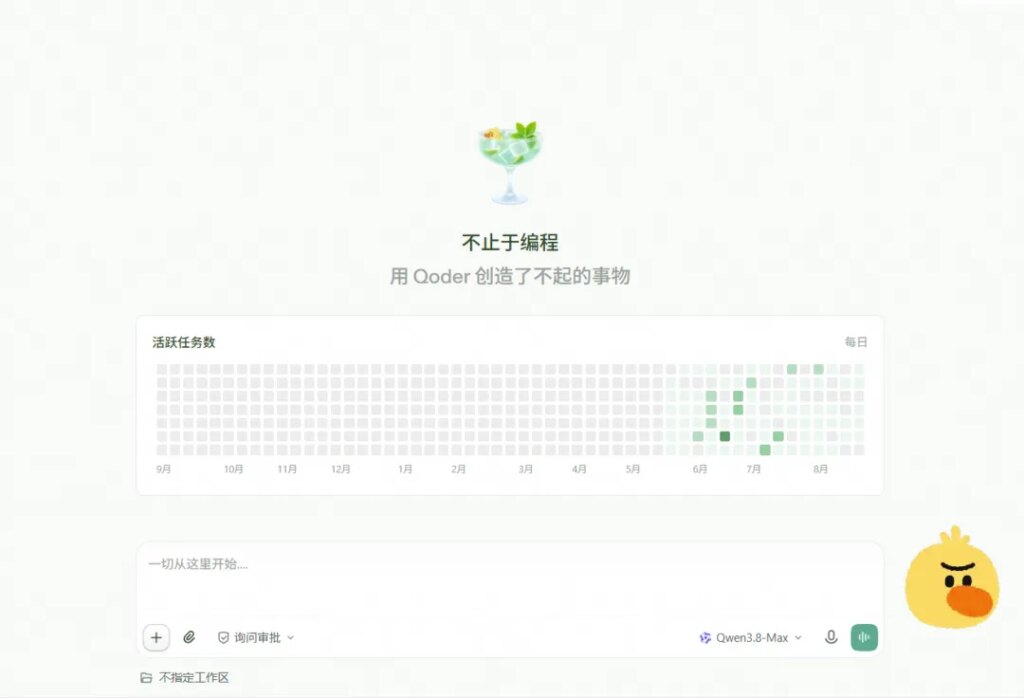
3. Alibaba launches redesigned Qoder, an AI agent workspace with coding capabilities for all users
Alibaba released a redesigned version of Qoder, an AI agent workspace centered on coding capabilities accessible to all users through natural language. The platform features a task-focused interface, supports over 40 connectors and 70 plugins, includes multiple frontier models like Qwen3.8-Max with auto scheduling, and offers both programming and general modes. New features include Plan and Goal functions for complex tasks, desktop assistant, real-time voice interaction, and integration with code repositories and cloud services. Since its global launch in August 2025, Qoder has served over 6 million users and more than 100,000 enterprise customers.
Video Credit: NotebookLM
That’s all for today’s China AI Native Industry Insights. Join us at AI Native Foundation Membership Dashboard for the latest insights on AI Native, or follow our linkedin account at AI Native Foundation and our twitter account at AINativeF.