AI Native Product Insights – 2026W35
Based on Product Hunt data, we’ve curated a selection of AI Native applications that demonstrate how AI is being built into the core of modern products. These AI Native solutions showcase new developments in functionality and are exploring fresh ways of human-AI interaction. Let’s dive into these AI Native applications.
1. x1
Ranking: 1
Upvote: 504
🚀 Product Overview
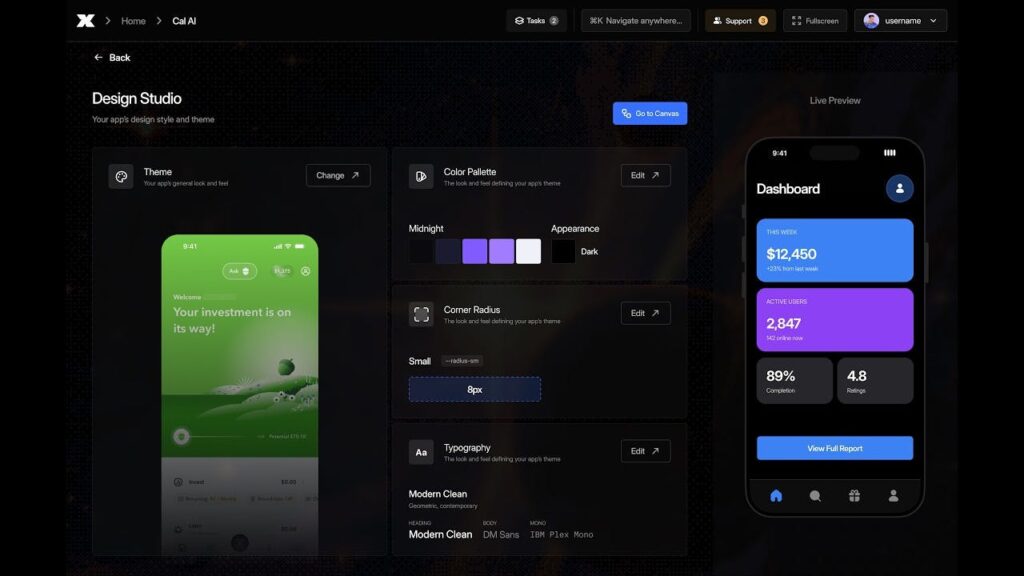
x1 is an AI-first iPhone app builder that turns an idea into a shippable App Store-ready app through a guided, step-by-step workflow. Instead of one-shot generation, it asks targeted questions, builds an app plan, drafts editable screens and flows, and iterates in stages so you can test on-device while the system maintains coherence across the product.
📊 Evaluation
AI Native Application Modernization: 88/100
The core value is an AI orchestration layer that keeps a structured memory of product decisions and propagates changes across dependent screens, flows, and features, reducing prompt brittleness during iteration. It also automates release readiness by generating App Store assets and guiding submission via an Apple Developer account, though outcomes will still depend on how well the guided spec captures edge cases and platform constraints.
🔗 Website
https://x1.new/
2. PostHog Desktop
Ranking: 9
Upvote: 350
🚀 Product Overview
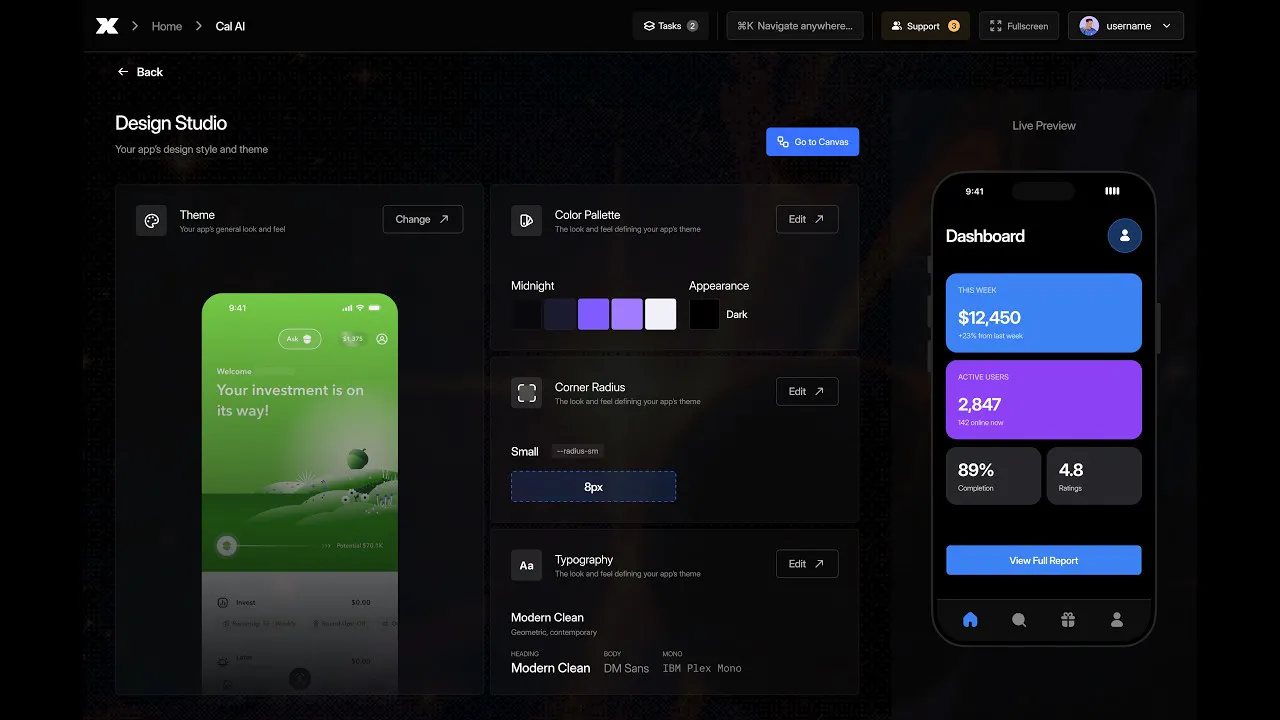
PostHog Desktop is an AI-native product editor where a fleet of agents builds directly from your real product context—logs, errors, session recordings, funnels, feature flags, experiments, and tickets—so work starts from production truth instead of a cold prompt. It runs parallel agents in a shared multiplayer workspace with persistent memory, supports multiple models, and connects via integrations (e.g., GitHub, Slack, Linear) to turn product signals into concrete plans and pull requests.
📊 Evaluation
AI Native Application Modernization: 87/100
Strong AI-native fit because agents are the core execution layer: they continuously interpret live product telemetry and collaborate in a stateful workspace to produce shippable artifacts (PRs, reports) rather than just code suggestions. The main risks are governance and reliability—teams will need clear guardrails for permissions, rollout control, and review flows when multiple autonomous agents can act across repos and production-linked workflows.
🔗 Website
https://posthog.com/
3. Offloop
Ranking: 13
Upvote: 311
🚀 Product Overview
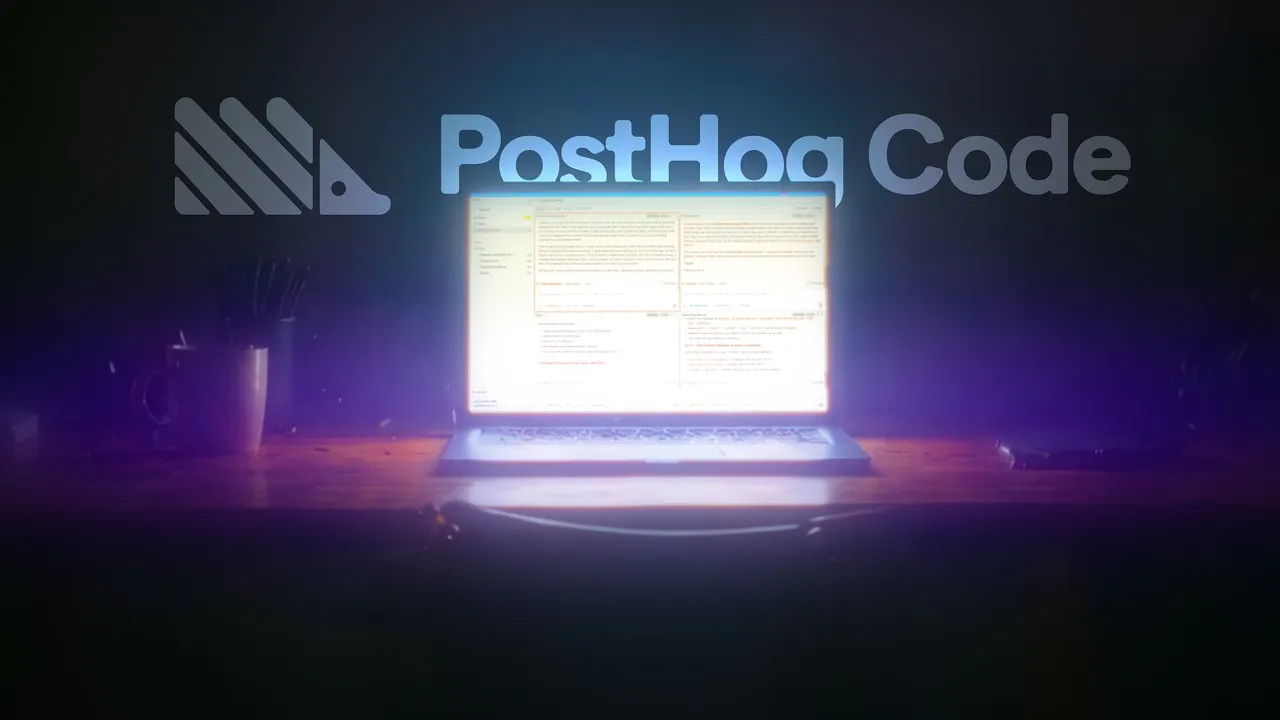
Offloop is a team workspace where AI agents operate as first-class participants alongside humans, working in shared channels with @mentions, ownership, reviews, and handoffs. It focuses on turning agent outputs into durable team progress by attaching context, files, decisions, tool activity, and artifacts to work items, while supporting reusable agent/flow execution across retries, schedules, and approvals.
📊 Evaluation
AI Native Application Modernization: 92/100
Offloop is AI-native because the core unit of work is agent execution within an organizational harness, not isolated prompting: identity, permissions, isolated runs, and approval gates govern what agents can access and do. Strong signs of modernization include traceable workflows, reusable automations, and model flexibility via bring-your-own-provider accounts with workspace defaults and per-agent model choices.
🔗 Website
https://offloop.org/
4. Agnost AI
Ranking: 16
Upvote: 289
🚀 Product Overview
Agnost AI is an AI-native observability layer for chat and voice agents that reads production conversations to surface failures traditional telemetry and predefined evals miss. It clusters real user interactions into recurring issues like hallucinated links, behavior drift, unresolved tasks, frustration, and churn signals, and ties each theme back to the exact conversations so teams can turn discoveries into new evals or direct debugging work.
📊 Evaluation
AI Native Application Modernization: 92/100
Agnost AI treats AI understanding of conversations as the core system of record for quality, moving beyond 200 OK metrics into behavior-level monitoring and discovery. The workflow is strongly agent-centric: it continuously mines live data, creates structured failure taxonomies, and feeds fixes via eval creation or coding-agent driven debugging, with low-friction integration (three lines of code or OpenTelemetry) suited to production scale.
🔗 Website
https://agnost.ai/

5. Lenz
Ranking: 20
Upvote: 256
🚀 Product Overview
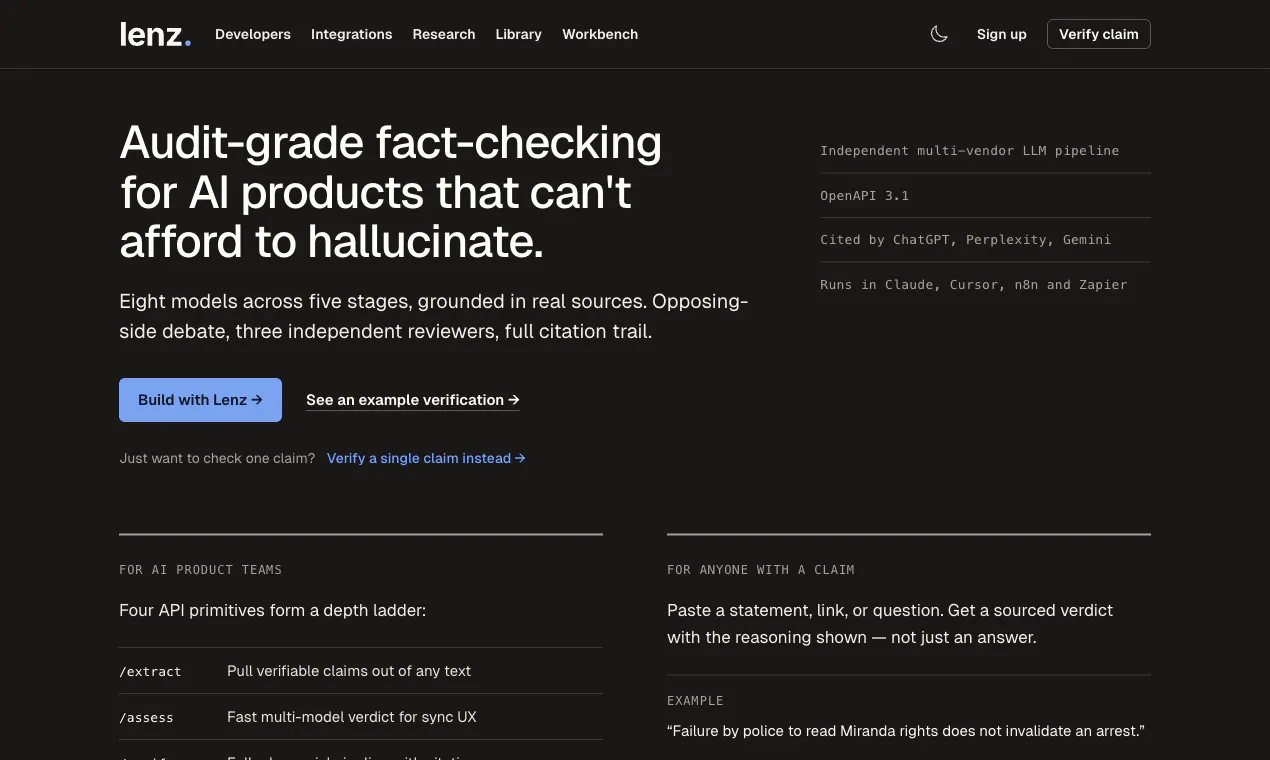
Lenz is an AI-workflow API/SDK that verifies factual claims in AI-generated text using an evidence-first pipeline, multi-vendor models, and structured verdict outputs. It exposes primitives like claim extraction, fast assessment, deep verification, and post-verification Q&A, returning an audit trail with sources, citations, reasoning, and confidence for integration in tools like Zapier, n8n, MCP, and CLI.
📊 Evaluation
AI Native Application Modernization: 88/100
AI is the core execution layer: the product orchestrates evidence collection, adversarial debate, and multi-model jurying to reduce single-model bias and surface model disagreement as a measurable risk in production content pipelines. It’s strong for programmable governance and traceability, with clear API building blocks; key adoption considerations are latency/cost tradeoffs for deep verification and aligning confidence thresholds to domain-specific compliance needs.
🔗 Website
https://lenz.io/
6. Context.dev
Ranking: 21
Upvote: 822
🚀 Product Overview
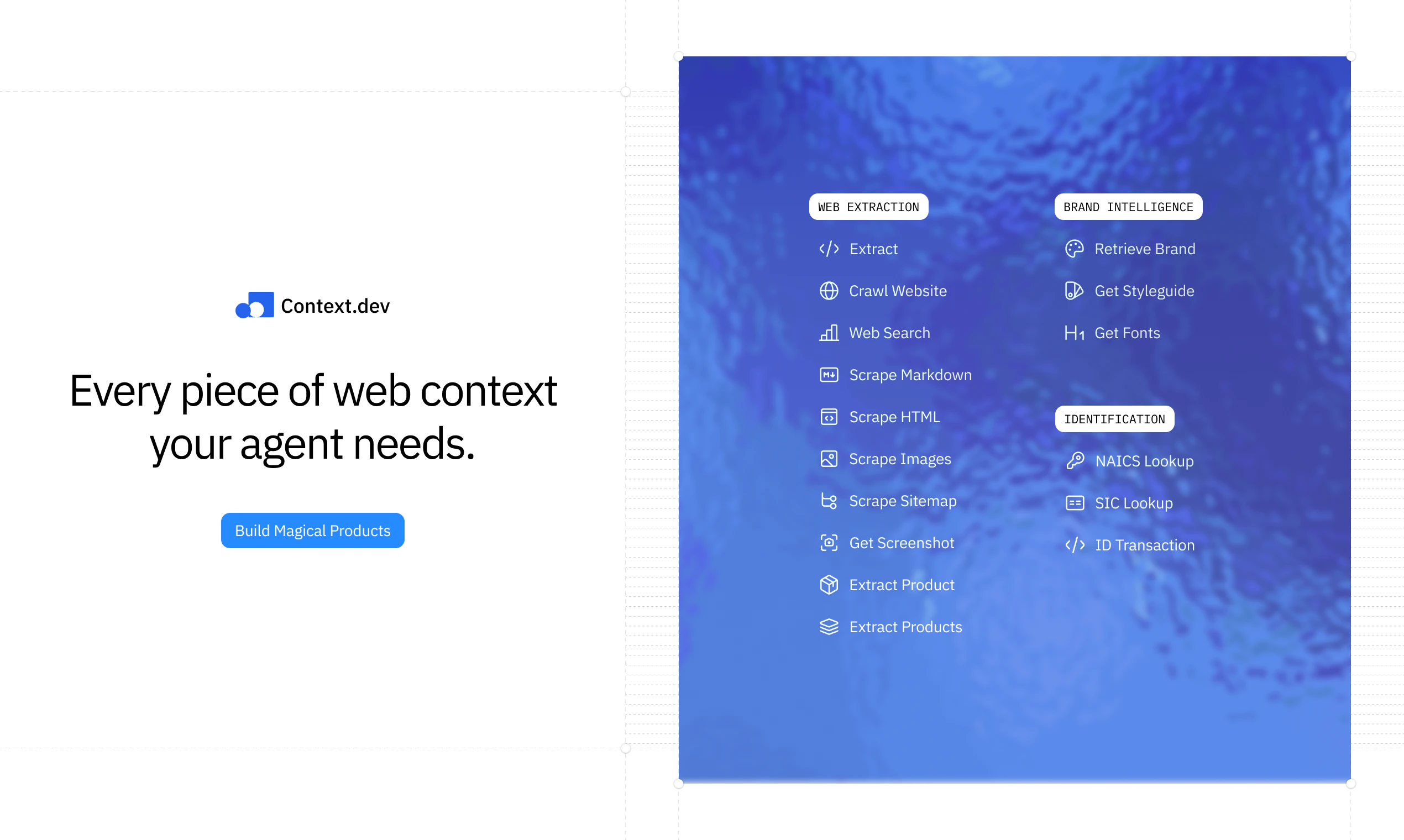
Context.dev is an agent-native API that turns live web access into a single programmable interface for scraping, crawling, rendering, and extracting LLM-ready content and structured fields from any site, plus assets like screenshots and brand elements for downstream workflows.
📊 Evaluation
AI Native Application Modernization: 87/100
The product is designed around AI systems that need fresh external context: outputs are optimized for RAG and agents (clean Markdown, schema-based extraction, enrichment), and the integration path is automation-first so coding agents can provision keys and wire the API into pipelines with minimal friction.
🔗 Website
https://context.dev/
7. Gemini 3.5 Transcribe
Ranking: 25
Upvote: 227
🚀 Product Overview
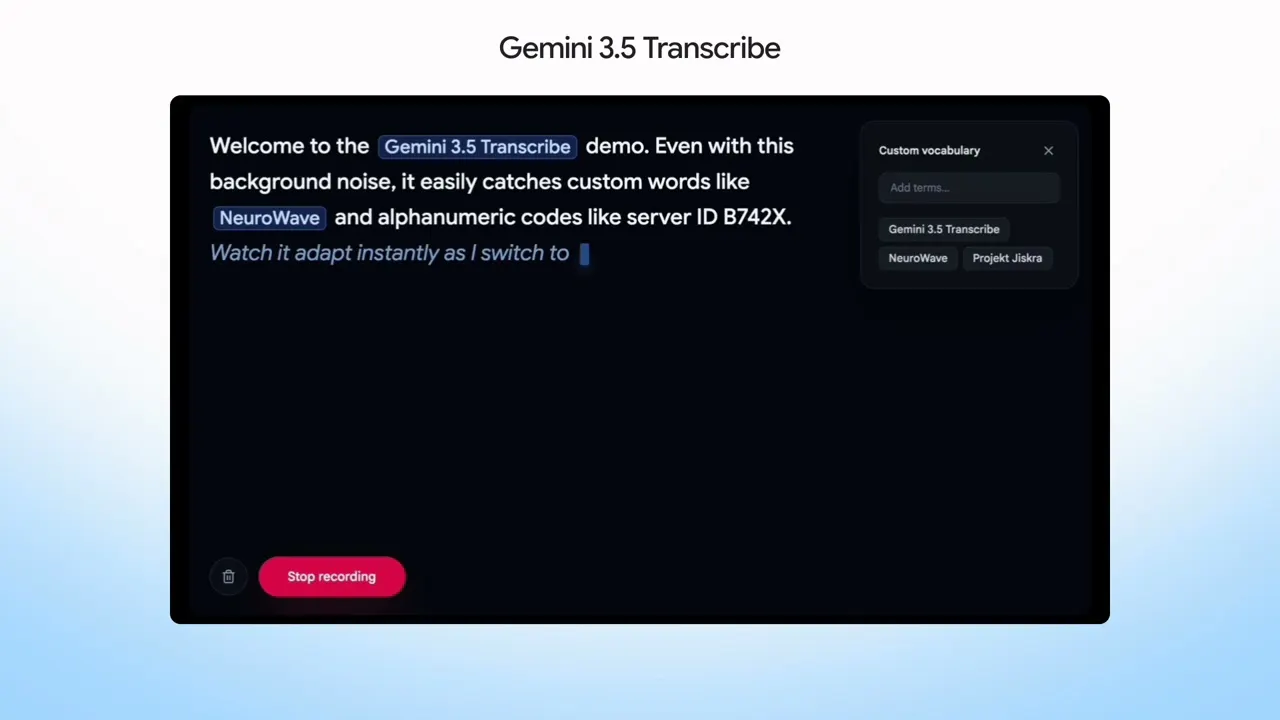
Gemini 3.5 Transcribe is a speech-to-text model designed for natural voice input, turning messy spoken language into structured text by handling self-corrections, removing filler words, and adding speaker timestamps across 85+ languages; it’s positioned as a core transcription layer inside Gemini for macOS and Rambler on Android, and is available for developers via Google AI Studio.
📊 Evaluation
AI Native Application Modernization: 92/100
The product is AI-native because the model is the system of record for interaction: it interprets intent and speaking style, performs denoising and formatting, and enables downstream actions like summarization or editing workflows that depend on high-fidelity transcripts; strengths include multilingual support and robustness in noisy environments, with practical limits around speaker count (up to 3) and the need for careful integration where accuracy and privacy requirements are strict.
🔗 Website
https://blog.google/innovation-and-ai/models-and-research/gemini-models/gemini-3-5-transcribe/
Statement: Evaluation results are generated by AI, lack of data support, reference learning only.