AI Native Product Insights – 2026W43
Based on Product Hunt data, we’ve curated a selection of AI Native applications that demonstrate how AI is being built into the core of modern products. These AI Native solutions showcase new developments in functionality and are exploring fresh ways of human-AI interaction. Let’s dive into these AI Native applications.
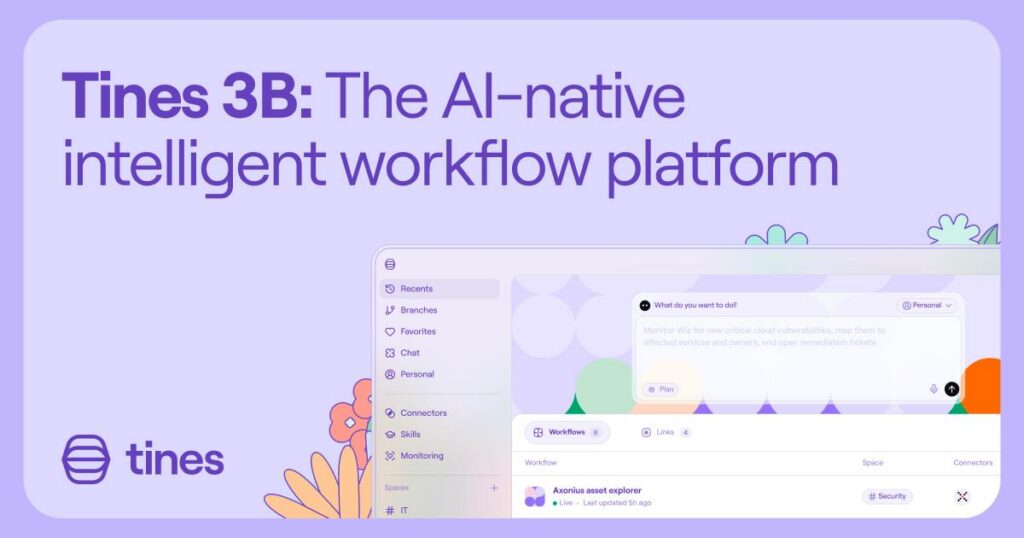
1. Tines
Ranking: 15
Upvote: 396
🚀 Product Overview
Tines is an AI-native, code-first platform for building and operating agents, apps, and automations in one governed environment, focusing on safely connecting AI-generated workflows to real systems without exposing secrets.
📊 Evaluation
AI Native Application Modernization: 88/100
Strong AI-native posture: it is designed for LLM-driven creation and operational control, with credential injection outside code, isolated execution, monitoring, and auditability to reduce “wild code” risk; remaining gaps are mainly around how teams standardize governance patterns at scale across diverse agent behaviors.
🔗 Website
https://tines.com/
2. Mistral Voxtral 3
Upvote: 214
🚀 Product Overview
Mistral Voxtral 3 is a family of speech-first AI models delivered via API, covering batch and real-time speech-to-text, controllable text-to-speech, and a voice agent SDK that runs a single live pipeline for listening, reasoning, tool calling, and speaking. It targets teams building multilingual voice apps, call transcription, and production voice agents that need diarization, context biasing for domain terms, and low-latency interactions without stitching together multiple vendors.
📊 Evaluation
AI Native Application Modernization: 92/100
This is AI-native because the core product is a modular speech model stack plus an agent runtime, designed around real-time inference constraints (latency, turn-taking) and orchestration (function calling, telephony/WebRTC) rather than UI features. The separation of ASR, TTS, and agent components enables swapping models and voices as system dependencies, while capabilities like context biasing and multi-speaker handling directly reduce the operational burden of adapting speech systems to real-world calls.
🔗 Website
https://mistral.ai/

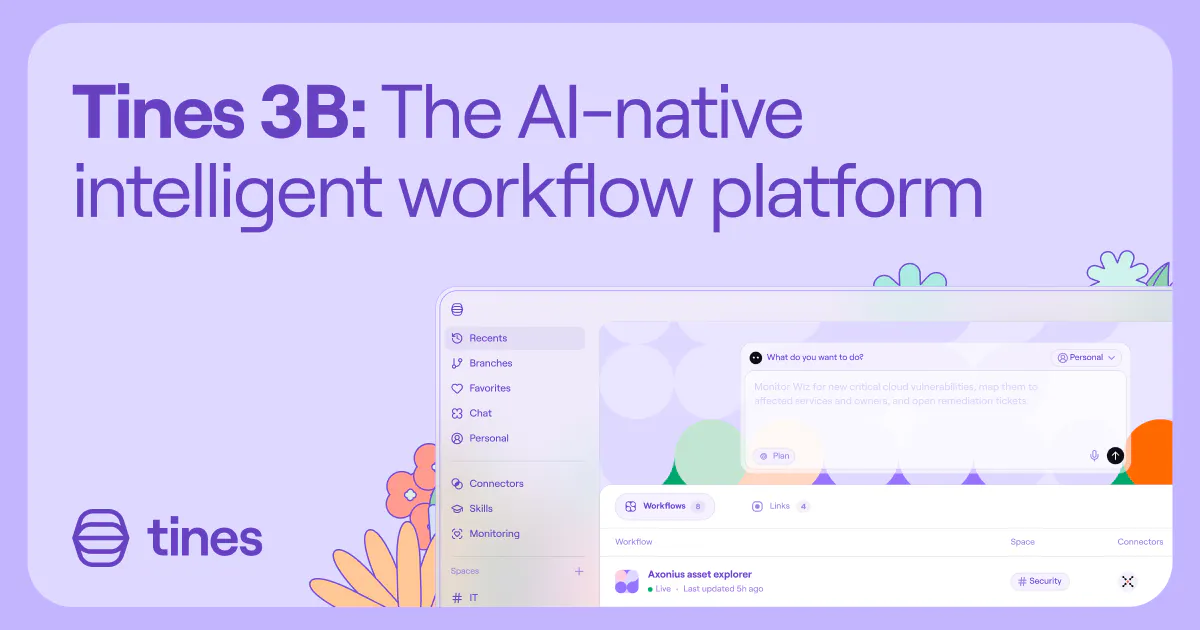
3. ElevenLabs Realtime
Ranking: 28
Upvote: 187
🚀 Product Overview
ElevenLabs Realtime is an end-to-end speech-to-speech model family for building low-latency voice agents, combining recognition, turn-taking, language reasoning, and voice generation into one integrated system to reduce conversational lag and interruptions. It offers v1 Mini for natural dialogue and v1 Max for higher-precision, complex workflows, available via ElevenAgents or a Realtime API designed to be OpenAI Realtime-compatible for easier migration.
📊 Evaluation
AI Native Application Modernization: 91/100
This is AI-native because the core runtime is a unified, real-time model pipeline rather than a stitched stack of ASR, LLM, and TTS components, enabling faster first audio and more stable conversational dynamics across many languages. Strong production readiness is reinforced by agent tooling (testing, monitoring, logs, guardrails) and enterprise controls (compliance options, data residency, retention modes), while the main dependency is fit to task complexity when selecting Mini vs Max.
🔗 Website
https://elevenlabs.io/realtime
4. Notion Auto
Ranking: 44
Upvote: 137
🚀 Product Overview
Notion Auto upgrades Notion Agents into long-running, workspace-native operators that can use a dedicated computer and browser, maintain extended context, and execute repeatable steps via scripts to complete real work inside Notion. It adds a model router (Auto) to balance speed and capability per task, a review/check mode for safer actions, a unified credit system for AI usage, and improved MCP-based interoperability so external agents can use Notion as shared context.
📊 Evaluation
AI Native Application Modernization: 88/100
The product is AI-native because agent execution, routing, safety checks, and cost controls are part of the core runtime rather than add-on features, enabling multi-hour task continuity and higher automation depth in a single workspace system. The strongest modernization signals are the agent harness with tool access (computer/browser/scriptability), adaptive model selection to control unit economics, and standardized credits that make usage predictable; remaining risk areas are governance and reliability at long horizons, where teams will need strong auditability, permissioning, and failure recovery as agents act across more tools.
🔗 Website
https://www.notion.com/releases/2026-10-19
5. Papermark Data Rooms
Ranking: 77
Upvote: 99
🚀 Product Overview
Papermark Data Rooms is an AI-operable virtual data room designed for deals like M&A, fundraising, and sales, where agents can create structured rooms, set permissions, and generate share links via API, CLI, and an MCP server. It focuses on fast setup, white-labeling for your brand and domain, and granular page-level analytics with audit logs to make document sharing both automatable and traceable.
📊 Evaluation
AI Native Application Modernization: 87/100
The product is AI-native because agent control is treated as a first-class interface rather than an add-on, enabling end-to-end workflows like provisioning folders, access policies, and links programmatically from tools such as Claude, Cursor, or ChatGPT. The modernization score reflects strong foundations in automation, observability, and governance, while longer-term differentiation will depend on deeper policy controls, safe agent execution boundaries, and enterprise-grade compliance features.
🔗 Website
https://www.papermark.com/
Statement: Evaluation results are generated by AI, lack of data support, reference learning only.