AI Native Product Insights – 2026W5
Based on Product Hunt data, we’ve curated a selection of AI Native applications that demonstrate how AI is being built into the core of modern products. These AI Native solutions showcase new developments in functionality and are exploring fresh ways of human-AI interaction. Let’s dive into these AI Native applications.
1. Kilo Code Reviewer
Ranking: 2026W5-rank1
Upvote: 807
🚀 Product Overview
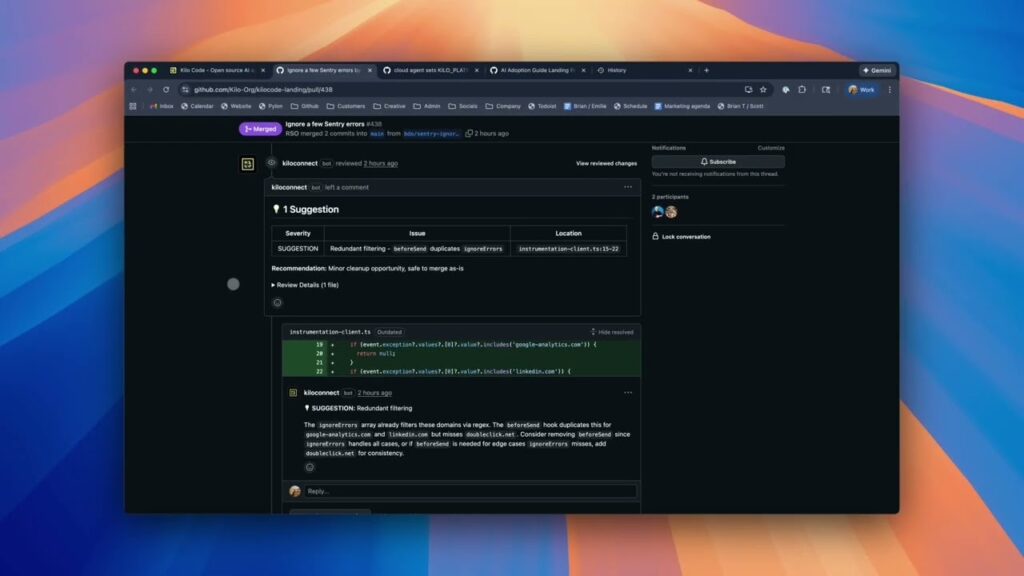
Kilo Code Reviewer is an AI-powered code review tool that automatically analyzes pull requests, flags issues, and suggests improvements before code is merged. It supports over 500 LLMs including Claude, GPT, Gemini, and more.
📋 More Details
It integrates directly with your PR workflow, identifying security flaws, performance bottlenecks, and style inconsistencies instantly. Developers receive inline AI-generated suggestions using models like MiniMax, CLM, and other top-tier or open-source LLMs—all with no manual overhead.
📊 Evaluation
AI Native Application Modernization: 90/100
AI is embedded at the heart of Kilo Code Reviewer. The core agent-driven review process leverages LLMs as first-class citizens, not as add-ons. Model selection is flexible and customizable, making intelligent automation an integral part of the development lifecycle.
🔗 Website
https://kilo.ai/?ref=producthunt
2. LobeHub
Ranking: 2026W5-rank9
Upvote: 409
🚀 Product Overview
LobeHub is an advanced agent collaboration platform where users can build, orchestrate, and grow AI teammates across end-to-end workflows. With persistent memory and evolvable logic, it enables both engineers and non-technical users to assemble reliable, specialized agent teams.
📋 More Details
Founded by the creator of LobeChat, LobeHub introduces an always-on, agent-first experience. Agents are treated as teammates—not tools—with editable long-term memory. Users can ideate, build, and execute using modular agents, leveraging a community ecosystem for reuse and customization backed by multi-model orchestration.
📊 Evaluation
AI Native Application Modernization: 94/100
LobeHub embodies AI-native design at its core. Generative agents aren’t just task runners—they evolve in memory, logic, and functionality with users over time. The platform’s entire UX is built around persistent, intelligent agent collaboration.
🔗 Website
https://app.lobehub.com/signin?referral=ph&ref=producthunt
3. Imagine
Ranking: 2026W5-rank10
Upvote: 401
🚀 Product Overview
Imagine is an AI-native platform that transforms natural language prompts into functional, production-ready applications. It combines design, logic, and deployment in a single tool—ideal for building internal tools, prototypes, or full applications without code or setup barriers.
📋 More Details
Built by the Appwrite team, Imagine lets users create real apps from ideas in minutes. It eliminates the need for multiple tools by offering an integrated platform with backend, auth, deployment, and more—no stitching required. Security, scalability, and compliance come out of the box.
📊 Evaluation
AI Native Application Modernization: 90/100
Imagine relies on generative AI as its foundation, turning user input directly into structured app components. This AI-centric approach powers dynamic UI generation, business logic, and deployment workflows, enabling a seamless build-from-prompt experience.
🔗 Website
https://imagine.dev/?ref=producthunt

4. Superagent from Airtable
Ranking: 2026W5-rank49
Upvote: 148
🚀 Product Overview
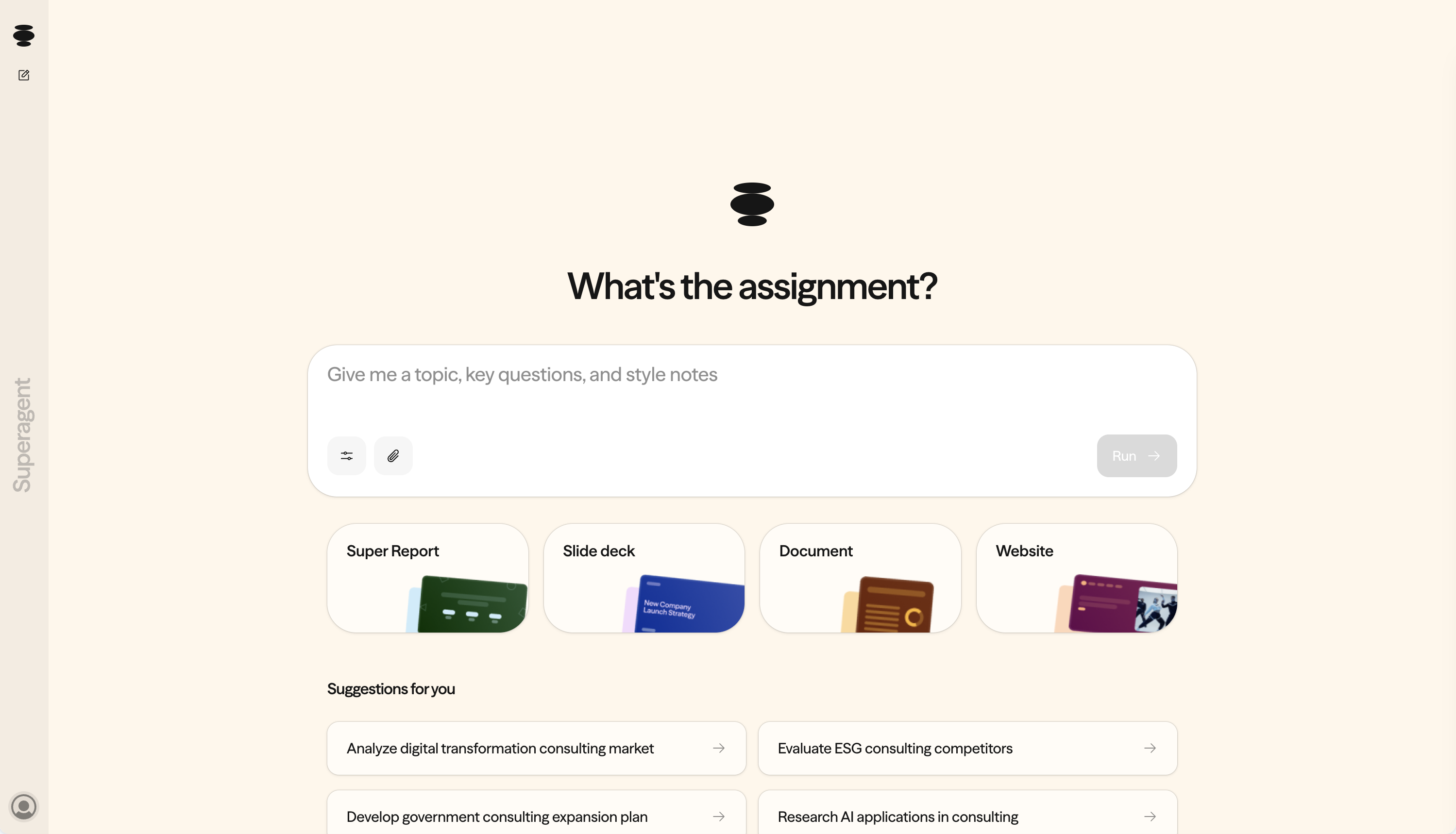
Superagent is a multi-agent AI research assistant that behaves more like a team than a single bot. It handles complex queries—such as market, competitor, or investment analysis—by autonomously planning, gathering data from credible sources, and delivering an interactive, ready-to-use report.
📋 More Details
CEO Howie Liu explains that Superagent leverages coordinated multi-agent workflows to deliver results faster and more intelligently. The product was built after Airtable’s acquisition of DeepSky and is a cornerstone of Airtable’s broader transition to a fully AI-native platform, including executive hires from OpenAI.
📊 Evaluation
AI Native Application Modernization: 91/100
Superagent uses AI not as a helper, but as the foundation—built entirely on multi-agent systems that plan, delegate, and synthesize information. It exemplifies how AI-native architecture can redefine user experience and business workflows.
🔗 Website
https://superagent.com/?ref=producthunt
Statement: Evaluation results are generated by AI, lack of data support, reference learning only.