AI Native Product Insights – 2026W11
Based on Product Hunt data, we’ve curated a selection of AI Native applications that demonstrate how AI is being built into the core of modern products. These AI Native solutions showcase new developments in functionality and are exploring fresh ways of human-AI interaction. Let’s dive into these AI Native applications.
1. InsForge
Ranking: 4
Upvote: 626
🚀 Product Overview
InsForge is an AI-agent-first backend that packages the core primitives needed to build and operate fullstack apps—database, auth, storage, edge functions, and a model gateway—behind a semantic layer that agents can reliably understand, plan against, and execute end-to-end workflows.
📊 Evaluation
AI Native Application Modernization: 89/100
The product is strongly AI-native because the semantic layer and integrated backend services are designed for agent reasoning and autonomous execution rather than human-only dashboards; the remaining gap is mainly in how broadly teams can govern, observe, and standardize agent-driven changes across environments at scale.
🔗 Website
https://insforge.dev/?ref=producthunt
2. Claude Code Review
Ranking: 7
Upvote: 522
🚀 Product Overview
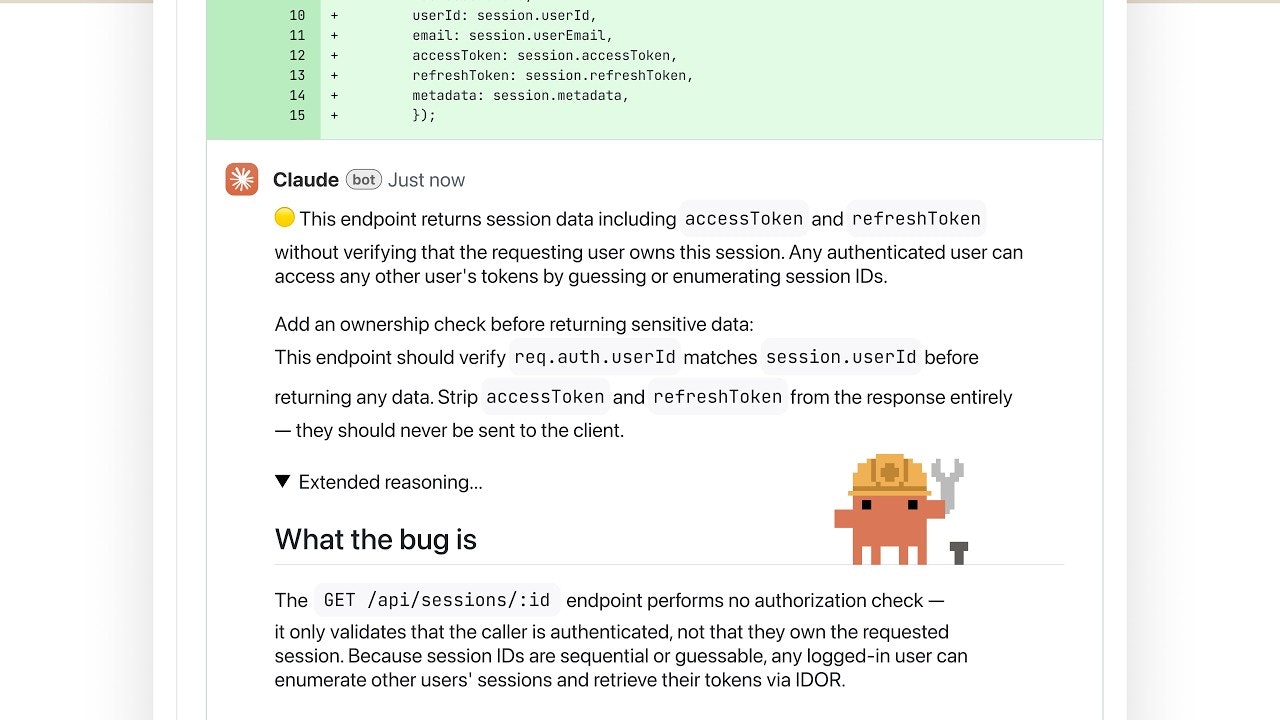
Claude Code Review is an AI-native, multi-agent system that automatically analyzes every pull request as a coordinated review team, surfacing bugs, security risks, and subtle logic regressions—especially in AI-generated code—before changes reach production.
📊 Evaluation
AI Native Application Modernization: 87/100
The product is deeply AI-native because the core workflow is autonomous, agent-based PR analysis with verification to reduce false positives, shifting code review from a manual process to an AI-run quality gate; the main constraint is that it’s in research preview and its effectiveness will depend on repo context, policy tuning, and developer trust calibration.
🔗 Website
https://www.anthropic.com/claude?ref=producthunt
3. Your Next Store
Ranking: 17
Upvote: 380
🚀 Product Overview
Your Next Store is an AI-native commerce stack that lets teams spin up design-forward stores through chat while grounding everything in structured commerce primitives exposed via APIs. Instead of generating a thin template, it produces a production-ready, Stripe-native Next.js app designed to plug into agent workflows (e.g., Codex/Claude Code) and still supports full code ownership when deeper customization is required.
📊 Evaluation
AI Native Application Modernization: 86/100
The product treats AI as an operating layer for store creation and ongoing iteration, with a codebase and domain model that agents can reliably reason about and modify. A modern Next.js foundation plus well-modeled primitives and Stripe-native payments indicate strong modernization, while the opinionated stack may trade some flexibility for consistency and agent-friendly structure.
🔗 Website
https://yournextstore.com/?ref=producthunt
4. OpenUI
Ranking: 21
Upvote: 350
🚀 Product Overview
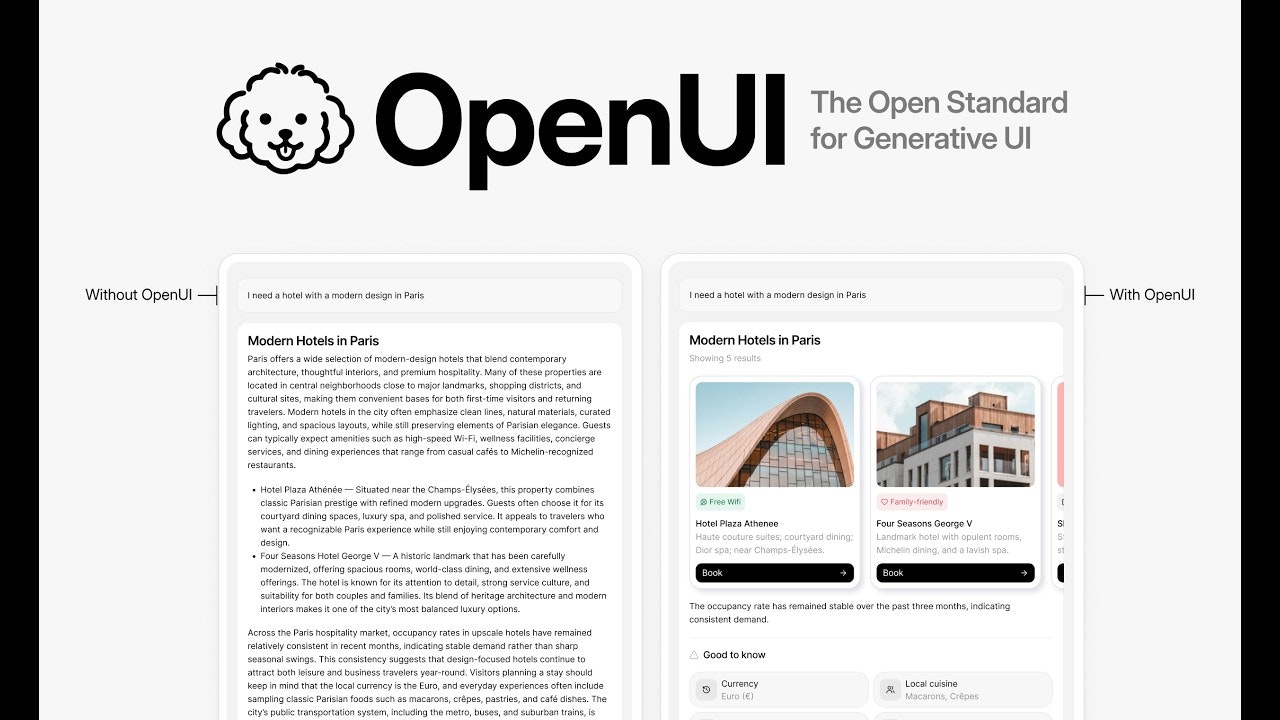
OpenUI defines an open, model-agnostic standard for generative interfaces, enabling LLMs and agents to return structured, interactive UI components (cards, tables, forms, charts) instead of plain text. Built for streaming outputs and token efficiency, it plugs into common agent stacks and works across major model providers, making UI generation a first-class part of AI app behavior.
📊 Evaluation
AI Native Application Modernization: 86/100
OpenUI modernizes AI apps by shifting interaction from chat text to machine-readable UI specs that can be streamed and rendered reliably, improving usability, latency, and cost at the system level. The score reflects strong AI-native design and broad compatibility, with the main dependency being consistent adoption across front-end renderers and developer workflows to avoid fragmented implementations.
🔗 Website
https://www.thesys.dev/?ref=producthunt
5. Raccoon AI
Ranking: 29
Upvote: 287
🚀 Product Overview
Raccoon AI is an AI-agent workspace where the agent operates with its own computer-like environment (terminal, browser, files, and internet) to execute end-to-end tasks such as research, app deployment, data analysis, and content creation, while keeping the user in the loop to review actions and steer outcomes.
📊 Evaluation
AI Native Application Modernization: 85/100
The product is strongly AI-native because the core workflow is agentic execution across tools and artifacts rather than prompt-only chat; transparent work traces and user steering support reliability, though real-world modernization impact depends on enterprise controls like permissions, auditing, and sandboxed integrations.
🔗 Website
https://raccoonai.tech/?ref=producthunt
Statement: Evaluation results are generated by AI, lack of data support, reference learning only.