AI Native Product Insights – 2026W18
Based on Product Hunt data, we’ve curated a selection of AI Native applications that demonstrate how AI is being built into the core of modern products. These AI Native solutions showcase new developments in functionality and are exploring fresh ways of human-AI interaction. Let’s dive into these AI Native applications.
1. Open Wearables
Ranking: 3
Upvote: 622
🚀 Product Overview
Open Wearables is an open, self-hostable infrastructure layer that unifies data access across major wearables through a single API and pairs it with transparent health scoring algorithms and structured context designed for AI reasoning, enabling teams to build personalized, wearable-driven health products with predictable data semantics.
📊 Evaluation
AI Native Application Modernization: 86/100
The product is strongly AI-native because it standardizes multi-device signals into machine-consumable context and exposes interpretable scoring primitives that can sit in an AI decision loop, while open-source self-hosting supports modernization paths for regulated health stacks; remaining gaps typically depend on downstream governance, clinical validation, and operational monitoring that each integrator must implement.
🔗 Website
https://openwearables.io/?utm_source=producthunt&utm_medium=ph&utm_campaign=OW&utm_id=Product+Hunt+&ref=producthunt
2. Radar
Ranking: 11
Upvote: 387
🚀 Product Overview
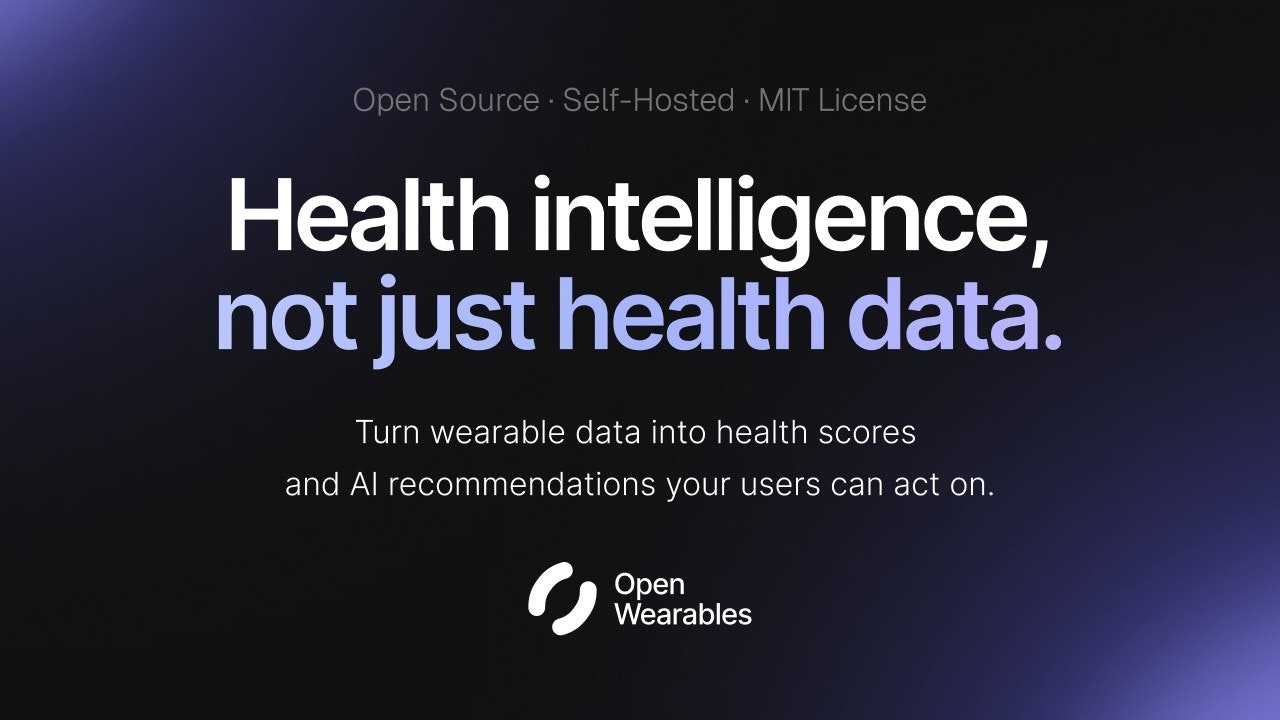
Radar is an open-source Kubernetes UI that consolidates cluster operations into a fast, local-first experience: topology, resources, events, Helm, GitOps views, traffic flows, and security checks, with image filesystem inspection for deeper debugging. It can run as a single binary or be self-hosted in-cluster with RBAC and OIDC, and includes MCP so AI agents can interact with cluster context through a structured interface without requiring a cloud account.
📊 Evaluation
AI Native Application Modernization: 86/100
Radar is AI-native by design because it exposes cluster state and operational actions through MCP, enabling agentic workflows to reason over live topology, events, and policies and then act safely within Kubernetes controls. The modernization strength is its unified UI plus deploy-anywhere model (single binary or in-cluster) and enterprise-ready access patterns (RBAC/OIDC), while the AI impact depends on how mature and extensible its MCP tooling and governance patterns are in real production use.
🔗 Website
https://radarhq.io/?ref=producthunt
3. AssemblyAI Voice Agent API
Ranking: 16
Upvote: 89
🚀 Product Overview
AssemblyAI Voice Agent API is an AI-native voice runtime that lets developers stream audio in and receive synthesized audio back while the platform orchestrates recognition, reasoning, tool calling, and turn-taking for real-time phone-style experiences with low latency and predictable pricing.
📊 Evaluation
AI Native Application Modernization: 87/100
This is strongly AI-native because real-time speech understanding and generation sit at the core of the interaction loop, with agent state changes (prompt, voice, tools) handled mid-call; it modernizes voice workflows by abstracting reliability constraints like tool-call silence and accuracy on entities, though production outcomes will still depend on tool design, safety policies, and telephony integration.
🔗 Website
https://assemblyai.com/?utm_source=producthunt&utm_medium=referral&utm_campaign=company_page&ref=producthunt
4. Wonder
Ranking: 24
Upvote: 276
🚀 Product Overview
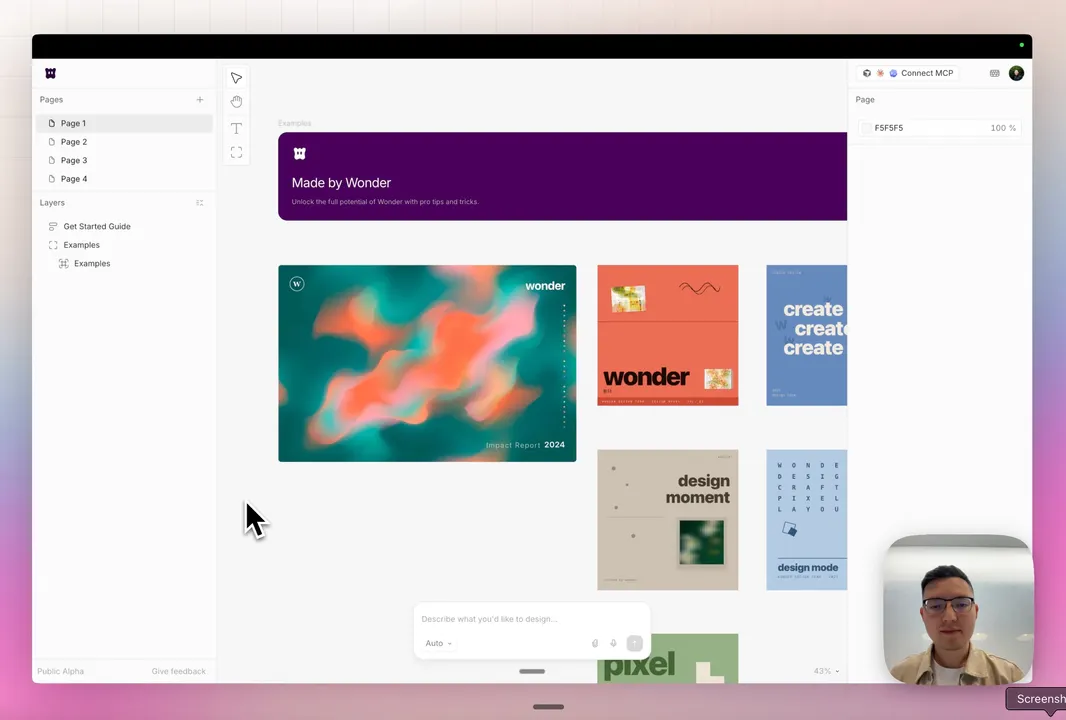
Wonder is an AI-first design workspace where an agent operates directly on the canvas to generate UI screens, graphics, and decks, and then iteratively refines selected elements in place, making the model part of the core editing loop rather than a separate prompt tool.
📊 Evaluation
AI Native Application Modernization: 88/100
The product is strongly AI-native because creation and modification happen through an on-canvas agent with tight human-in-the-loop control, and the MCP connection to coding agents bridges design-to-implementation workflows; the main risk is maturity (public alpha) and how reliably it preserves design systems and constraints at scale.
🔗 Website
https://wonder.design/?ref=producthunt
Statement: Evaluation results are generated by AI, lack of data support, reference learning only.