AI Native Weekly Newsletter: 22 May 2026
Contents
-
OpenAI Model Disproves 80-Year-Old Erdős Conjecture in Discrete Geometry
-
Google launches Gemini 3.5 Flash as its strongest agentic and coding model yet
-
Alibaba unveils Qwen3.7-Max as a flagship model for AI agents
-
Anthropic adds self-hosted sandboxes and MCP tunnels to Claude Managed Agents
-
xAI launches Grok Build early beta for SuperGrok Heavy subscribers
-
Figma launches AI design agent directly inside the design canvas
OpenAI Model Disproves 80-Year-Old Erdős Conjecture in Discrete Geometry

OpenAI announced that an internal general-purpose reasoning model has disproved a longstanding conjecture in the planar unit distance problem, first posed by Paul Erdős in 1946. The model produced an infinite family of point configurations that improves on the square-grid constructions long believed to be essentially optimal. The proof was verified by a group of external mathematicians, including Fields medalist Tim Gowers, and marks the first time AI has autonomously solved a prominent open problem central to a mathematical subfield.
Google launches Gemini 3.5 Flash as its strongest agentic and coding model yet
Google introduced Gemini 3.5 Flash on May 19, 2026 at Google I/O, the first model in a new family combining frontier intelligence with action. The model outperforms Gemini 3.1 Pro on coding and agentic benchmarks including Terminal-Bench 2.1 (76.2%), GDPval-AA (1656 Elo), and MCP Atlas (83.6%), while running 4 times faster than other frontier models in output tokens per second. Gemini 3.5 Flash is available via the Gemini app, AI Mode in Google Search, Google Antigravity, the Gemini API in Google AI Studio and Android Studio, Gemini Enterprise Agent Platform, and Gemini Enterprise. Gemini 3.5 Pro is already being used internally and is expected to roll out next month.
Alibaba unveils Qwen3.7-Max as a flagship model for AI agents
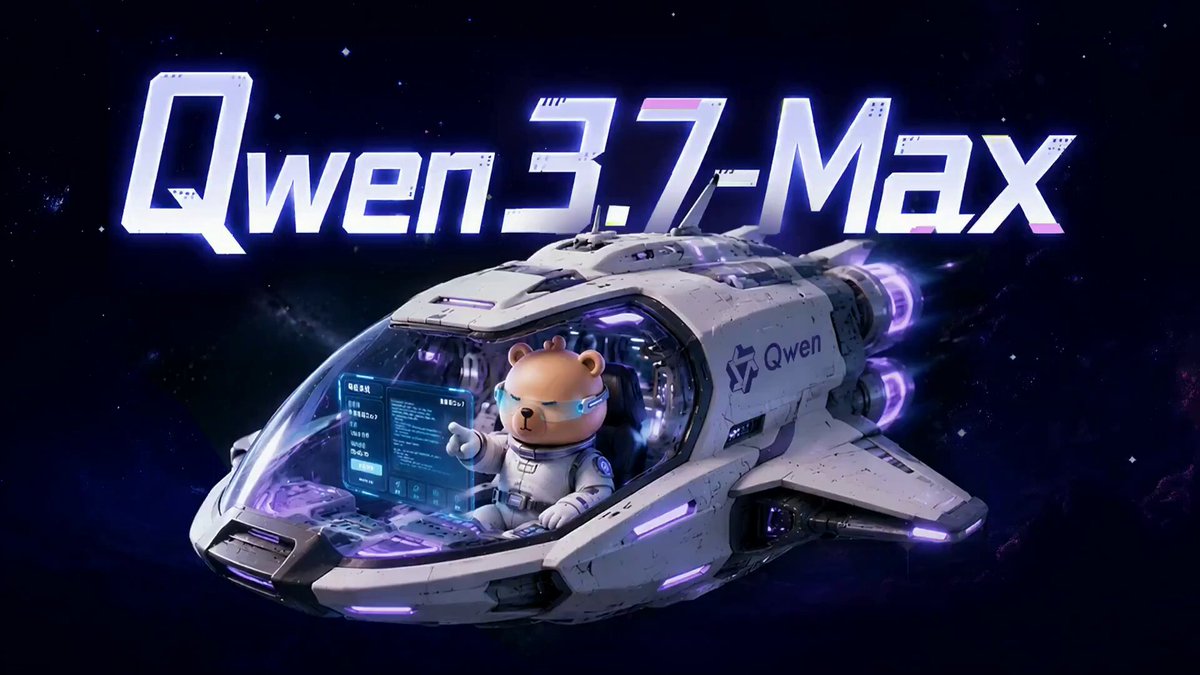
Alibaba’s Qwen team unveiled Qwen3.7-Max, its latest flagship model built for agent-era workloads including coding, office productivity, workflow automation, and long-horizon autonomous tasks. The model is positioned as a versatile agent foundation model that can work across mainstream agent frameworks and sustain complex multi-step execution. In a 35-hour autonomous kernel optimization task, Qwen3.7-Max made more than 1,000 tool calls and demonstrated a 10x speedup over the Triton reference.
Anthropic adds self-hosted sandboxes and MCP tunnels to Claude Managed Agents
Anthropic announced two new Claude Managed Agents features: self-hosted sandboxes and MCP tunnels. Self-hosted sandboxes, now in public beta, let companies run agent tool execution in their own infrastructure or through providers such as Cloudflare, Daytona, Modal, and Vercel, while Anthropic continues to manage the agent loop. MCP tunnels, in research preview, allow agents to connect to private MCP servers, internal databases, private APIs, knowledge bases, and ticketing systems without exposing them to the public internet.
xAI launches Grok Build early beta for SuperGrok Heavy subscribers
xAI launched Grok Build, an early-beta coding agent and command-line interface for professional software engineering and complex coding work. Available first to SuperGrok Heavy subscribers, Grok Build can run from the terminal, support plan-review-approve workflows, show clean diffs, and work with existing project conventions such as AGENTS.md, plugins, hooks, skills, and MCP servers. It also supports parallel subagents for larger tasks and includes a feedback command for beta users.
Figma launches AI design agent directly inside the design canvas
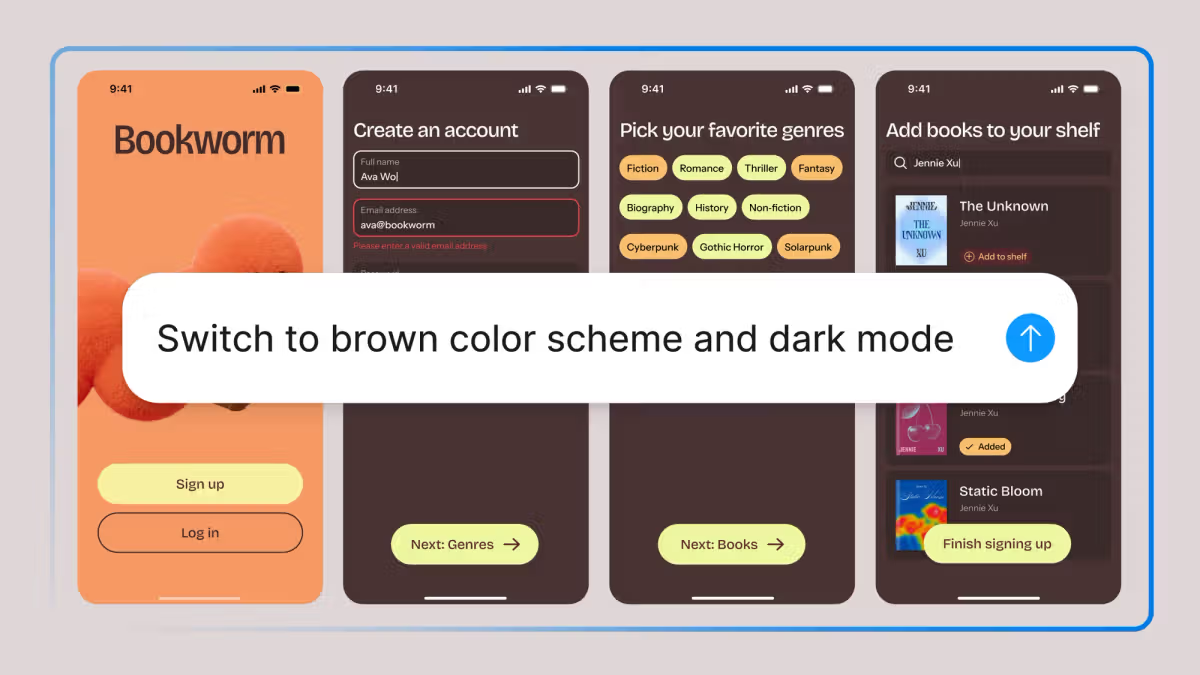
Figma launched an AI design agent that works directly inside Figma Design, helping users generate design layers, explore multiple directions, automate bulk edits, apply design systems, and act on feedback without switching tools. The agent can start from design layers, use components, libraries, tokens, variables, and team context, and support tasks such as updating typography, replacing copy and imagery, converting screens to dark mode, and organizing comments into next steps. It is rolling out gradually in beta via early-access requests, with no AI credit usage during beta and availability for Full seat users on Professional, Organization, and Enterprise plans.