AI Native Product Insights – 2026W21
Based on Product Hunt data, we’ve curated a selection of AI Native applications that demonstrate how AI is being built into the core of modern products. These AI Native solutions showcase new developments in functionality and are exploring fresh ways of human-AI interaction. Let’s dive into these AI Native applications.
1. LobeHub
🏅 Product Hunt Data
Ranking: 5
Upvote: 498
🚀 Product Overview
LobeHub is an AI-native Chief Agent Operator that turns a goal into an orchestrated team of agents, selecting skills, running tasks in parallel, and routing work across models in the cloud. It keeps humans in the loop only for key decisions and delivers updates through existing chat channels like Slack, Discord, Telegram, and iMessage.
📊 Evaluation
AI Native Application Modernization: 88/100
Strong AI-native architecture with multi-agent planning, execution, and model routing as the primary workflow rather than an add-on feature. Modernization impact is high because it moves work from manual tool switching to asynchronous, channel-based operations, though reliability and governance will depend on agent observability, permissions, and cost controls at scale.
🔗 Website
2. Drizz
Ranking: 10
Upvote: 399
🚀 Product Overview
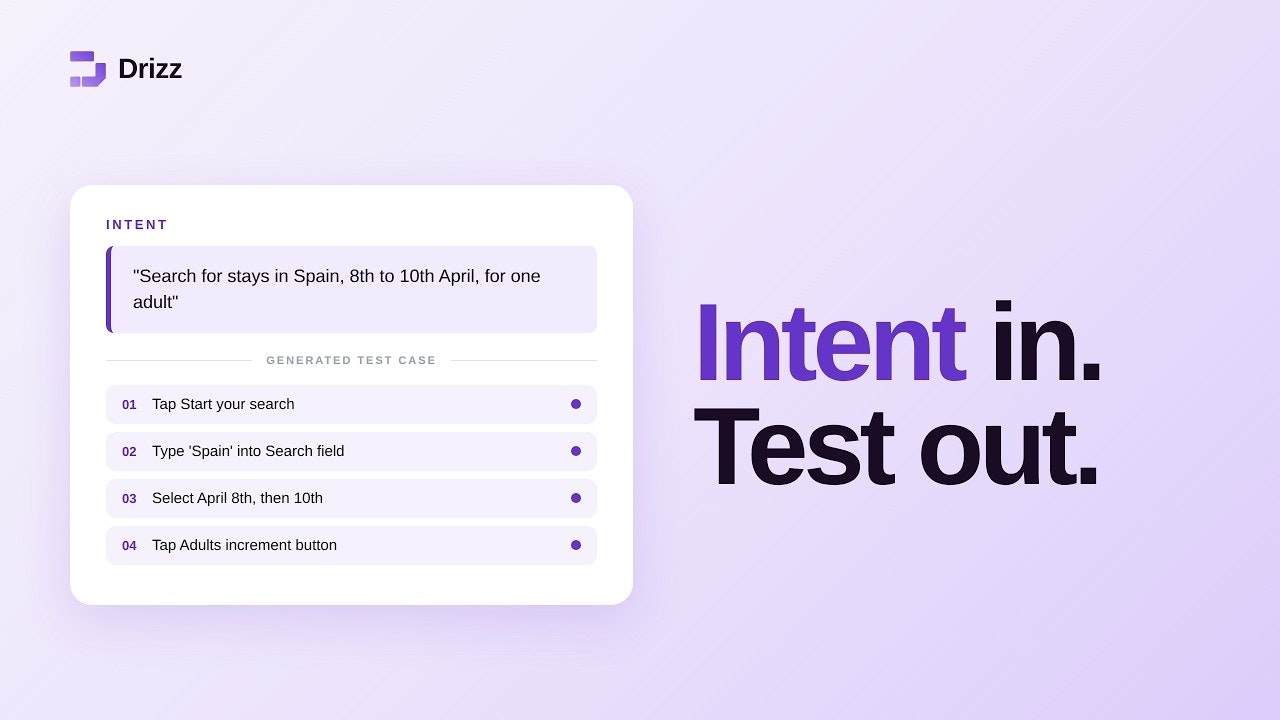
Drizz is an AI-native mobile test automation platform that turns plain-English testing intent into executable end-to-end flows on real devices using vision-based understanding, then auto-authors reusable test cases. By relying on UI perception rather than brittle selectors, it reduces scripting and ongoing maintenance while fitting into CI/CD for continuous coverage.
📊 Evaluation
AI Native Application Modernization: 86/100
The core workflow is built around AI reasoning and Vision AI execution—tests are generated, run, and repaired based on intent, which modernizes how teams maintain mobile QA. The score reflects strong AI centrality and practical integration into engineering pipelines, with remaining variability typically driven by app-specific UI complexity and edge-case determinism requirements.
🔗 Website
https://www.drizz.dev/?ref=producthunt
3. Stitch 3.0 by Google
Ranking: 11
Upvote: 384
🚀 Product Overview
Stitch 3.0 is an AI-native UI generation workspace that turns text prompts into mobile and web screens on a live canvas, then keeps designs editable through streaming iterations and in-place AI changes, with quick export paths into common design and deployment tools for rapid prototyping.
📊 Evaluation
AI Native Application Modernization: 86/100
The product is AI-first because generation and iteration are the primary interaction model, not a side feature, and the live canvas plus export integrations modernize early-stage app building by compressing the design-to-handoff cycle; it still depends on downstream tools for full production design systems and engineering rigor.
🔗 Website
https://stitch.withgoogle.com/?ref=producthunt

4. Runtime
Ranking: 19
Upvote: 282
🚀 Product Overview
Runtime is an AI-agent runtime that turns coding agents into secure, usable teammates across Slack, Linear, CLI, API, and the browser, so non-specialists can request features, data queries, dashboards, and workflow automation within company context, integrations, and guardrails.
📊 Evaluation
AI Native Application Modernization: 86/100
Strong AI-native design where agents are the primary execution layer, paired with sandboxing and enterprise controls that reduce operational risk; the main modernization lift is ensuring reliable permissions, observable runs, and maintainable workflows as agent-driven changes scale across teams.
🔗 Website
https://runtm.com/?ref=producthunt
5. WeWeb 3.0
Ranking: 20
Upvote: 281
🚀 Product Overview
WeWeb 3.0 is an AI-native app builder that turns prompts into working web apps and then exposes every generated artifact—UI screens, workflows, and database structure—inside a no-code editor so non-coders can iteratively refine behavior without losing visibility or control.
📊 Evaluation
AI Native Application Modernization: 85/100
The product uses AI as the primary build mechanism and pairs it with an editable visual system, reducing “black-box” generation risk and improving maintainability; modernization strength is high for rapid prototyping-to-production workflows, though complex governance and large-scale engineering constraints may still require complementary developer tooling.
🔗 Website
https://www.weweb.io/?ref=producthunt
6. Google Antigravity CLI
Ranking: 25
Upvote: 243
🚀 Product Overview
Google Antigravity CLI is an AI-agent command-line interface that runs coding agents directly in the terminal, enabling multi-step reasoning, multi-file edits, tool calling, and session history so developers can plan, modify, and iterate on code without leaving SSH or keyboard-first workflows.
📊 Evaluation
AI Native Application Modernization: 85/100
The product is AI-native because the agent is the primary execution model: it reasons across steps, invokes tools, and performs coordinated edits across files with persistent context, turning the terminal into an orchestrated AI workspace rather than a traditional CLI with add-on suggestions.
🔗 Website
https://antigravity.google/?ref=producthunt
7. Freu AI
Ranking: 31
Upvote: 229
🚀 Product Overview
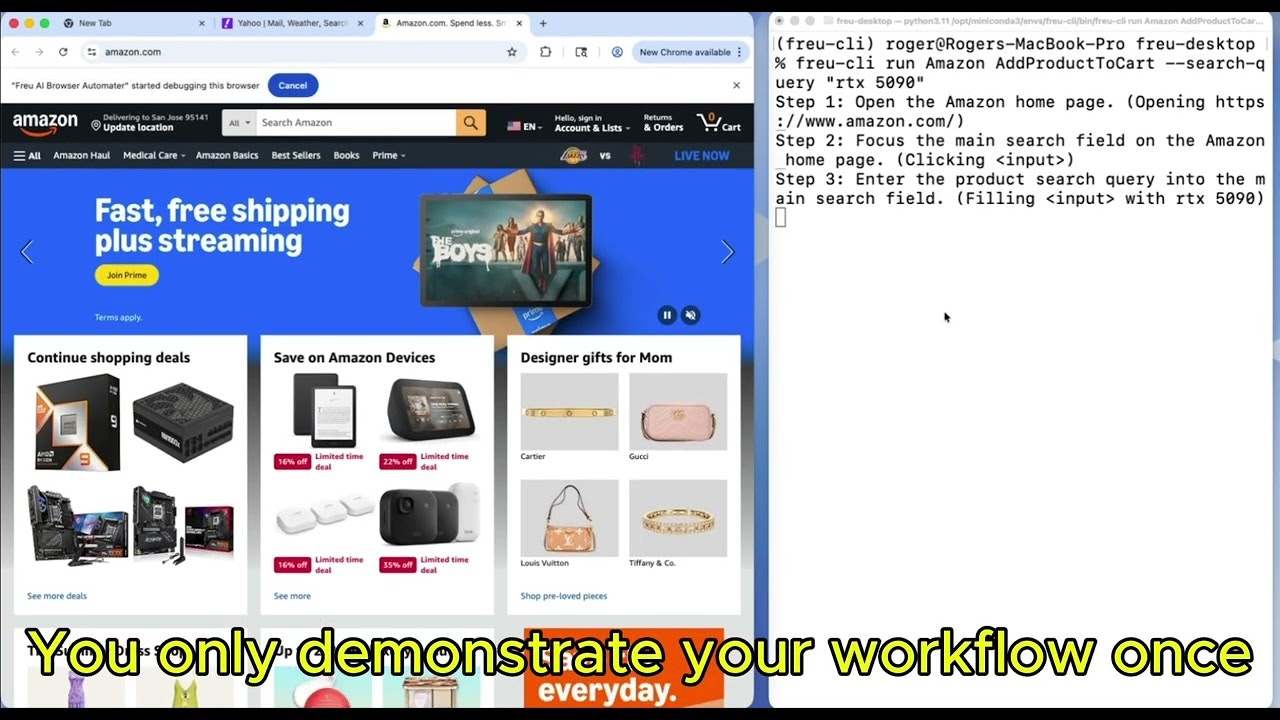
Freu AI is a Mac-native AI agent that turns natural language instructions into repeatable, cross-app desktop workflows by interpreting what’s on screen, compiling the flow once, and then executing it locally without relying on brittle UI coordinates/selectors or ongoing token-based run costs.
📊 Evaluation
AI Native Application Modernization: 85/100
The core architecture is AI-first: perception and intent are used to generate a deterministic DSL that can be run locally, shifting automation from fragile, script-by-script maintenance to compiled workflows that are cheaper to operate and more resilient across apps, with additional leverage from open-sourcing the freu-cli automation engine.
🔗 Website
https://freu.ai/?ref=producthunt
Statement: Evaluation results are generated by AI, lack of data support, reference learning only.