AI Native Product Insights – 2026W25
Based on Product Hunt data, we’ve curated a selection of AI Native applications that demonstrate how AI is being built into the core of modern products. These AI Native solutions showcase new developments in functionality and are exploring fresh ways of human-AI interaction. Let’s dive into these AI Native applications.
1. MakersClaw
Ranking: 9
Upvote: 425
🚀 Product Overview
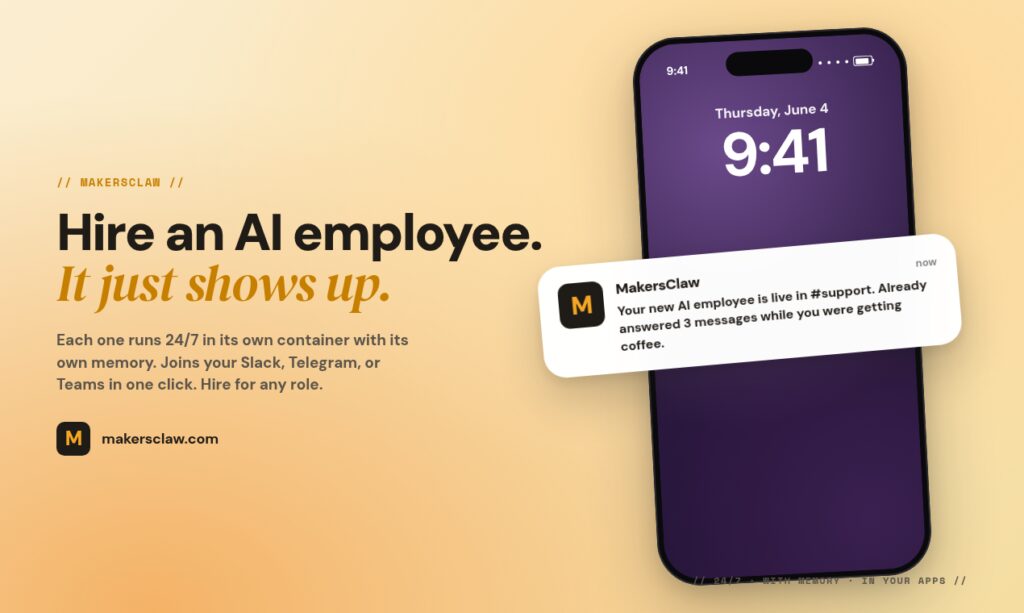
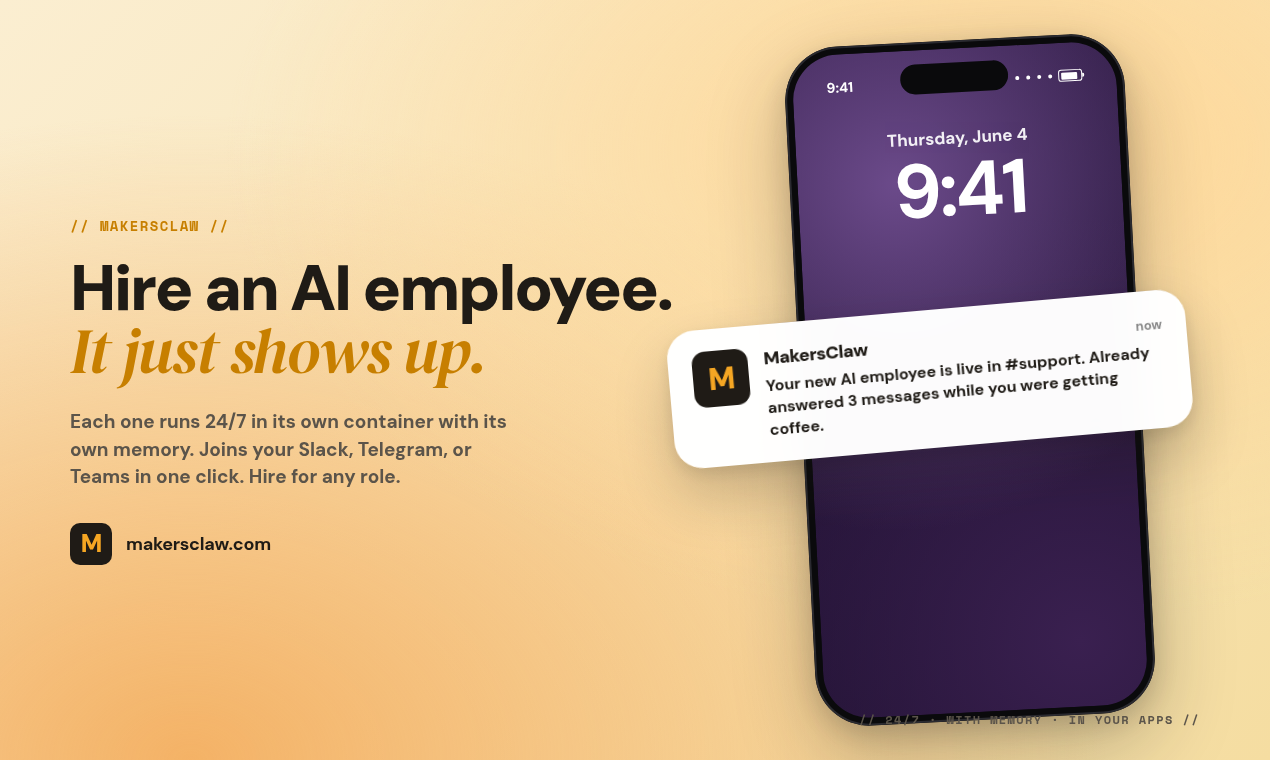
MakersClaw provides AI employees that run continuously in isolated containers with persistent memory, designed to operate as first-class teammates inside Slack, Microsoft Teams, or Telegram. Teams can deploy pre-built agents for support, sales, research, and SEO, or define custom roles that call tools on demand with usage-based billing.
📊 Evaluation
AI Native Application Modernization: 85/100
The product is AI-native because autonomous agents, long-running execution, and memory are the core runtime model rather than an add-on workflow. Strong integration into collaboration channels and containerized isolation support modern operations, while outcomes will depend on governance, tool permissioning, and reliability of multi-step agent actions in production.
🔗 Website
https://www.makersclaw.com/
2. Tabstack Dev Tools
Ranking: 11
Upvote: 360
🚀 Product Overview
Tabstack Dev Tools is an AI-native web data and automation API that replaces brittle scraping and multi-step pipelines by returning structured JSON, clean markdown, and cited research from a single call, plus browser actions when needed. It ships as a developer-first surface across MCP, CLI, Raycast, and agent skills so teams can plug reliable web retrieval and task execution directly into coding workflows without operating their own browser/LLM stack.
📊 Evaluation
AI Native Application Modernization: 85/100
The product is AI-core because extraction, normalization, citation grounding, and automation are delivered as the primary system interface (an API) rather than an add-on, materially reducing infra and orchestration burden for modern agentic apps. The main modernization gap is limited visibility into controllability and guarantees (e.g., schema stability, determinism, and compliance/audit tooling) that enterprises often need when replacing in-house pipelines at scale.
🔗 Website
https://tabstack.ai/
3. Quartz
Ranking: 23
Upvote: 263
🚀 Product Overview
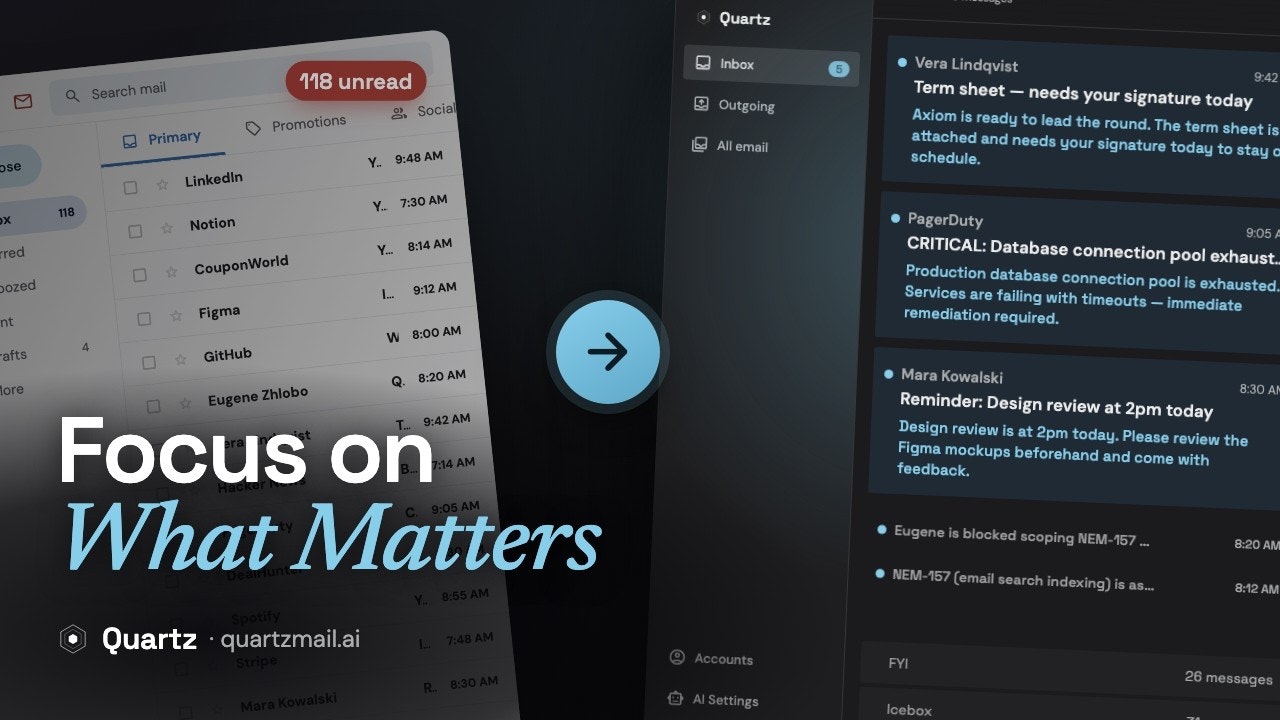
Quartz is a Mac-native AI email client for Gmail that prioritizes focus by ranking messages by importance, learning your personal signal over time, and generating replies in your own writing style, with inference running locally so content is not sent to external AI providers.
📊 Evaluation
AI Native Application Modernization: 85/100
Quartz makes AI the core workflow engine—triage, personalization, and drafting are driven by on-device models—while improving privacy and reducing vendor dependency; the main modernization constraints are platform scope (Mac-only) and reliance on Gmail as the backend rather than a fully re-architected email stack.
🔗 Website
https://www.quartzmail.ai/
4. Fin
Ranking: 33
Upvote: 521
🚀 Product Overview
Fin is an AI-first customer service agent within Intercom that autonomously resolves support requests end-to-end using company knowledge and conversation context, with a startup program offering a year of included usage and discounted access to the broader Intercom support suite.
📊 Evaluation
AI Native Application Modernization: 86/100
Fin is designed around autonomous resolution rather than assisted replies, indicating strong AI-native workflow ownership and measurable outcomes (resolutions) as the primary unit of value; the remaining gap is typically in deployment complexity, governance, and edge-case handling that still benefit from human oversight and mature operational tooling.
🔗 Website
https://fin.ai/

5. API to MCP
Ranking: 34
Upvote: 197
🚀 Product Overview
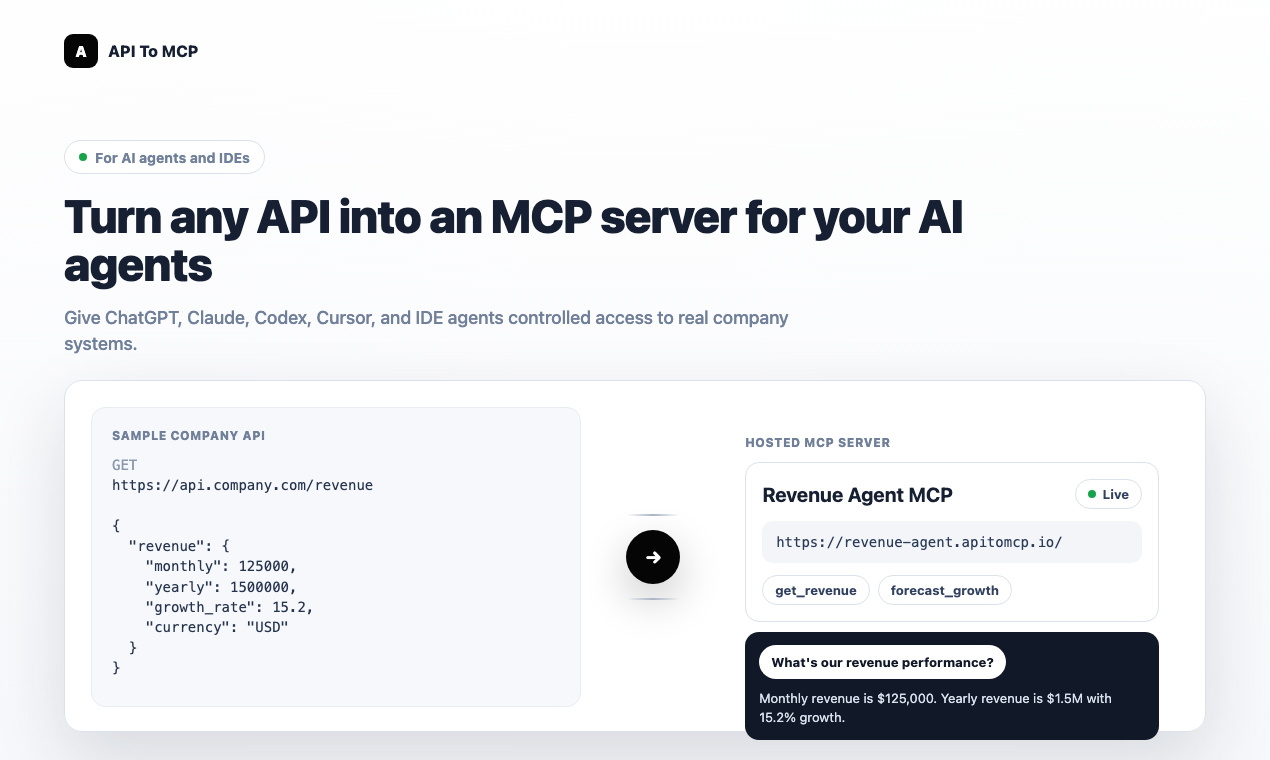
API to MCP is an AI-agent infrastructure layer that converts existing REST/GraphQL/SaaS and internal APIs into hosted MCP servers, enabling agents to reliably discover and call tools with secure authentication and governed execution. It supports building tool schemas in a dashboard or having an agent generate, test, and deploy tools from API documentation, then lets users connect the live MCP server to common agent runtimes.
📊 Evaluation
AI Native Application Modernization: 88/100
The product is AI-native because the core value is standardizing how agents interface with operational APIs through MCP, shifting integrations from bespoke code to agent-consumable, testable tool endpoints. Strong points include OAuth/secure auth, workflow support, and forkable snapshots for reproducibility; the main modernization gap is that robustness still depends on upstream API quality, rate limits, and ongoing schema/version governance.
🔗 Website
https://apitomcp.ai/
Statement: Evaluation results are generated by AI, lack of data support, reference learning only.