China AI Native Industry Insights – 20260702 – Z.ai | Alibaba | Kunlun Tech | more
Explore ZCode launch, HydraHead architecture, and Tiangong’s AI workspace integration. Discover more in Today’s China AI Native Industry Insights.
1. Z.ai Launches ZCode, Dedicated Development Environment for GLM-5.2
Z.ai has launched ZCode, the official development environment built specifically for its GLM-5.2 coding model, available on macOS, Windows, and Linux. GLM Coding Plan subscribers receive a 1.5x usage quota boost within ZCode. The environment also supports BYOK (Bring Your Own Key), allowing users to connect their existing subscriptions and APIs. ZCode expands Z.ai’s developer tooling ecosystem alongside the GLM Coding Plan, which is designed to support AI-powered coding workflows including code generation, debugging, and codebase understanding.
Read more: https://zcode.z.ai/en/changelog
Video Credit: NotebookLM
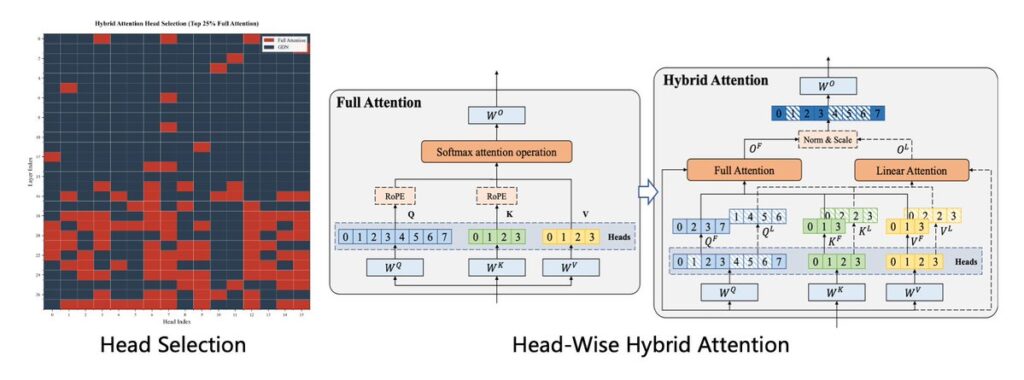
2. Alibaba Tongyi Lab Proposes HydraHead Architecture for Head-Level Attention Hybridization
Alibaba’s Tongyi Lab has introduced HydraHead, a new attention hybridization architecture described in a research paper. HydraHead fuses Full Attention and Linear Attention at the head level, rather than at the layer level, treating the attention head as the natural granularity for hybridization. The approach is motivated by insights from mechanistic interpretability and aims to build more efficient long-context language models. By operating at the head level, HydraHead offers a finer-grained method for combining different attention mechanisms compared to prior layer-level approaches.
Read more: https://arxiv.org/abs/2606.20097
Video Credit: NotebookLM
3. Tiangong 3.2 Launches Skywork Tags: Bringing AI Agents Directly Into Your Team’s Workspace
Skywork Tags is a new feature that embeds the Skywork AI agent directly into team communication platforms — including Slack, Feishu/Lark, DingTalk, Discord, and Telegram — eliminating the need to migrate context into a separate AI environment. Unlike personal assistants, Skywork Tags operates as a single shared agent within a channel, making its activity transparent to all members and enabling asynchronous handoffs between teammates. The longer a team uses it, the more context it accumulates, compounding in value over time. Internal testing showed that a shared agent used by a hundred-person team outperformed individually fine-tuned versions within just two to three weeks.
Read more: https://mp.weixin.qq.com/s/OqL6ID-mAel8XN-slYgXOA
Video Credit: The original article
That’s all for today’s China AI Native Industry Insights. Join us at AI Native Foundation Membership Dashboard for the latest insights on AI Native, or follow our linkedin account at AI Native Foundation and our twitter account at AINativeF.