China AI Native Industry Insights – 20260717 – Kimi | Tencent | Alibaba | more
Today’s digest features significant updates from Moonshot AI, Tencent, Alibaba Cloud, and MiniMax, each pushing the envelope in their respective areas. The overarching theme is the advancement of AI capabilities, from skill monetization to transformative audio applications. Moonshot AI’s Kimi K3 is the first open 3T-class model aimed at advancing frontier intelligence, while Tencent’s SkillPay system integrates distribution, usage, and payments to monetize agent skills. Alibaba Cloud’s Qwen-Audio-3.0-Realtime moves voice AI beyond conversation, enabling actionable outputs, and MiniMax’s Code 2.0 offers a comprehensive architecture upgrade for more reliable AI workflows. These advancements demonstrate a commitment to creating more intelligent and practical AI solutions. Discover more in Today’s China AI Native Industry Insights.
1. Moonshot AI Introduces Kimi K3: The First Open 3T-Class Model Advancing Frontier Intelligence
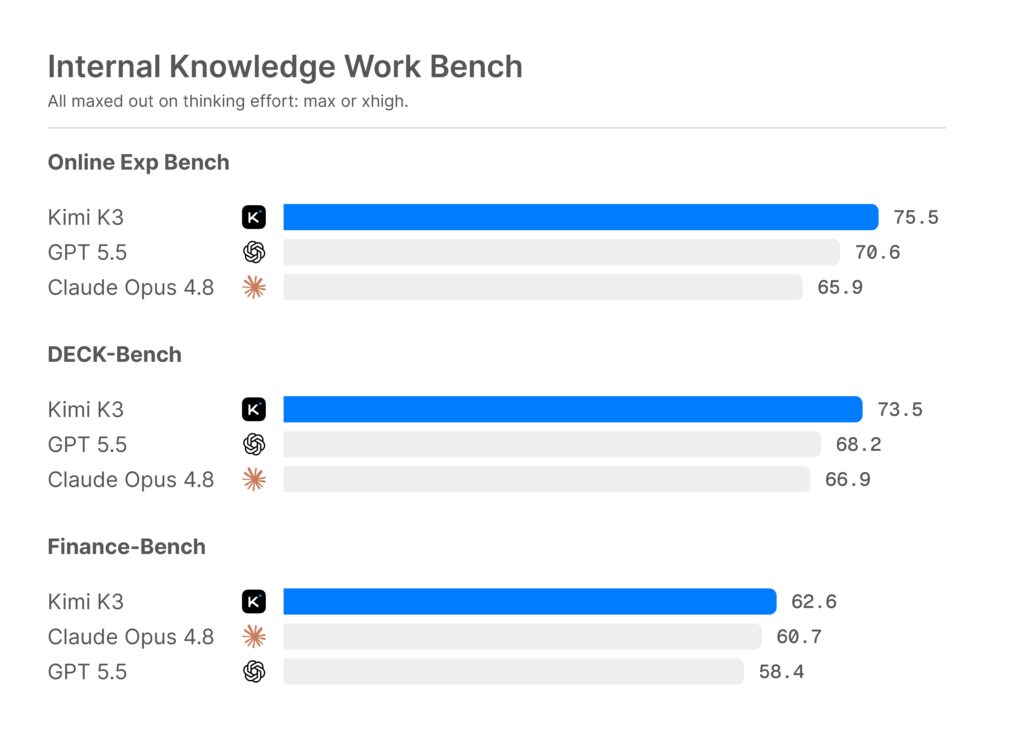
Moonshot AI has launched Kimi K3, its most capable model to date and the world’s first open 3T-class AI model. Built with 2.8 trillion parameters, Kimi K3 introduces architectural innovations including Kimi Delta Attention (KDA) and Attention Residuals (AttnRes), alongside native vision capabilities and a 1-million-token context window. Designed for frontier-level coding, knowledge work, and complex reasoning, Kimi K3 achieves improved scaling efficiency through expanded Mixture of Experts (MoE) architecture, refined training methods, and optimized data strategies, delivering approximately 2.5× better scaling efficiency than Kimi K2. The model demonstrates strong performance across comprehensive evaluations and is now available through
Read more: https://www.kimi.com/blog/kimi-k3
Video Credit: The original article
2. Tencent Launches SkillPay: Enabling Agent Skill Monetization Through Integrated Distribution, Usage, and Payments
Tencent has launched SkillPay, an Agent skill monetization platform within SkillHub that connects skill distribution, AI agent execution, and payment infrastructure into a unified ecosystem. Businesses can easily transform existing capabilities into Pay Skills, define pricing models, and monetize their services through Agent interactions without building separate payment systems. Users can access professional services such as financial analysis, AI-generated content creation, and travel booking directly within Agent conversations, with seamless payment powered by WeChat Pay AI accounts. By combining trusted skill verification, secure payments, and open commercialization tools, SkillPay aims to accelerate the Agent economy and enable more developers and businesses to deliver paid AI-powered services.
Read more: https://mp.weixin.qq.com/s/TtxqzHPvZX7Ff6GGHgHp-g
Video Credit: NotebookLM
3. Alibaba Cloud Releases Qwen-Audio-3.0-Realtime: Advancing Voice AI from Conversation to Action
Alibaba Cloud has introduced Qwen-Audio-3.0-Realtime, a real-time speech interaction model designed to move voice AI beyond simple conversations toward intelligent task execution. The model delivers major upgrades in reasoning, Agent tool calling, empathetic interaction, and full-duplex communication, with two variants: Plus for stronger reasoning and Flash for faster responses. Qwen-Audio-3.0-Realtime supports native tool usage through FunctionCall, MCP, APIs, and knowledge bases, allowing voice agents to autonomously access external services while maintaining conversation context. It also enables adaptive emotional expression, multi-speaker understanding, noise-resistant interactions, and natural listen-and-speak capabilities. Built with an online policy distillation framework, the model combines language reasoning, agent capabilities, and audio intelligence to create more capable real-time voice agents.
Read more: https://mp.weixin.qq.com/s/W1Lp3trsMXfNTmetkBtCQg
Video Credit: The original article
4. MiniMax Code 2.0 Released: A Complete Agent Architecture Upgrade for More Reliable AI Workflows
MiniMax has launched MiniMax Code 2.0 desktop, featuring a major underlying architecture redesign powered by the open-source Pi Agent framework. The update improves long-running task execution, session management, context continuity, and tool-calling reliability, enabling AI agents to handle complex workflows with greater stability and efficiency. The new version also enhances productivity features such as chart visualization, full-screen viewing, file preview, and in-place editing, creating a smoother path from task execution to final delivery. In addition, MiniMax Code 2.0 introduces financial intelligence capabilities through integrations with financial databases and enterprise data services, enabling agents to support research, investment analysis, and risk management workflows. Upcoming features including remote control, browser automation, goal mode, and planning mode will further expand its ability to handle complex tasks across environments.
Read more: https://mp.weixin.qq.com/s/mQeBO0xC6Z1R0LqZX5TvNg
Video Credit: The original article
That’s all for today’s China AI Native Industry Insights. Join us at AI Native Foundation Membership Dashboard for the latest insights on AI Native, or follow our linkedin account at AI Native Foundation and our twitter account at AINativeF.