AI Native Product Insights – 2026W29
Based on Product Hunt data, we’ve curated a selection of AI Native applications that demonstrate how AI is being built into the core of modern products. These AI Native solutions showcase new developments in functionality and are exploring fresh ways of human-AI interaction. Let’s dive into these AI Native applications.
1. Osaurus
Ranking: 6
Upvote: 697
🚀 Product Overview
Osaurus is an open-source AI agent platform built to run locally on Apple Silicon Macs, keeping memory, context, and files on-device by default. It supports offline local models via a Swift MLX runtime, while optionally connecting to frontier models through bring-your-own-key providers, and it includes an approval-gated agent workflow that can interact with macOS data and produce real outputs through a sandboxed execution environment.
📊 Evaluation
AI Native Application Modernization: 89/100
Osaurus treats AI agents as the primary computing interface rather than an add-on, combining local inference, tool access, and supervised action execution in a desktop-native architecture. The modernization strength is high due to its on-device privacy model, native Swift stack, and extensible agent pattern, with remaining gaps largely dependent on broader model availability/performance on consumer hardware and the maturity of agent safety/observability for advanced workflows.
🔗 Website
https://osaurus.ai/
2. Framer AI Agents
Ranking: 10
Upvote: 737
🚀 Product Overview
Framer AI Agents brings agentic workflows directly onto the website canvas so teams can generate layouts, write and refine copy, analyze pages, and organize structure while designing and publishing in one place, with options to connect external models like Claude Code or Codex for custom AI execution.
📊 Evaluation
AI Native Application Modernization: 86/100
The product treats AI as an interactive co-worker embedded in the core authoring surface rather than a side panel, accelerating iteration from intent to publish; modern collaboration features like branching support safer AI-driven experimentation, though outcomes still depend on clear prompting, design guardrails, and governance for connected third-party models.
🔗 Website
http://www.framer.com/

3. Zro
Ranking: 13
Upvote: 510
🚀 Product Overview
Zro is an OpenAI-compatible inference API for open-weight models built for AI coding agents, prioritizing privacy and operational control without forcing teams to run their own GPU stack. It offers multi-region hosted serving, zero data retention, optional on-prem deployment, and an inference stack tuned for long-context and agentic coding workloads.
📊 Evaluation
AI Native Application Modernization: 89/100
Zro modernizes AI app delivery by treating inference as the core platform layer—standardized API compatibility, privacy-by-default retention policies, and deployment flexibility enable teams to move from prototype agents to production systems with clearer governance. The main gap is model breadth and ecosystem maturity versus hyperscalers, but the architecture is aligned with AI-native reliability and compliance needs.
🔗 Website
https://zro.moonmath.ai/
4. Clark
Ranking: 14
Upvote: 493
🚀 Product Overview
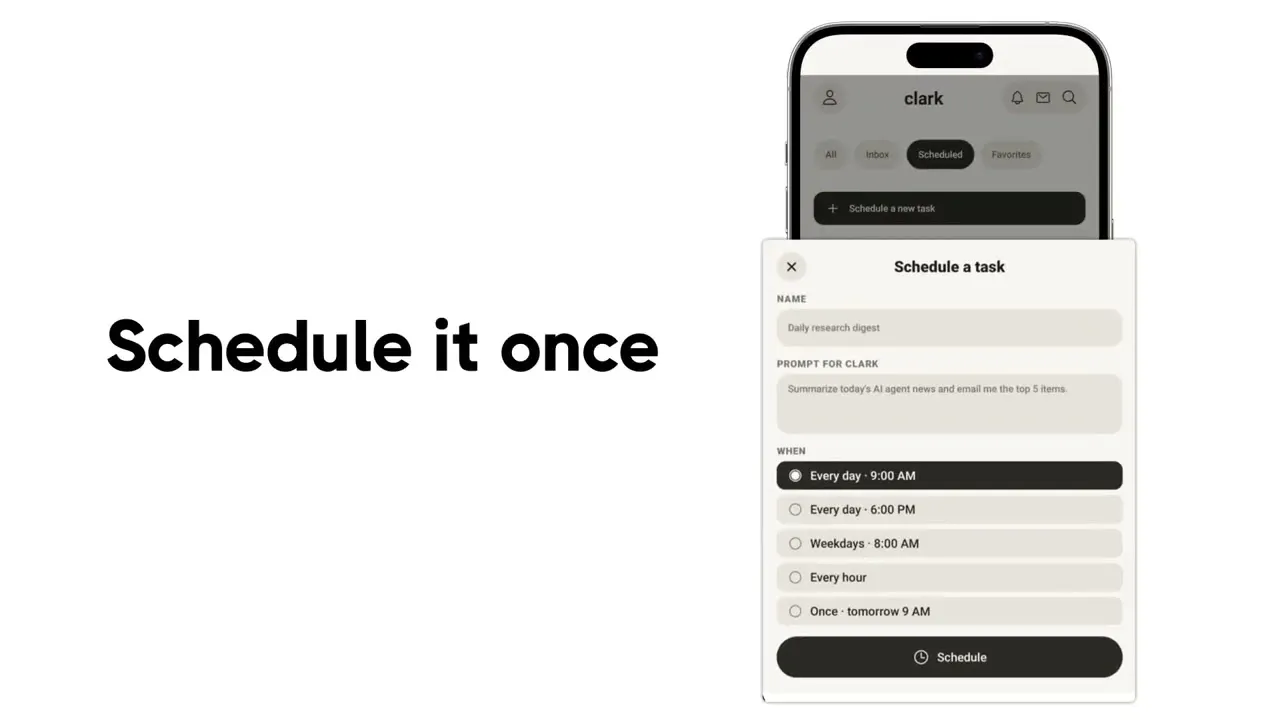
Clark is an AI coworker that runs work inside its own cloud computer, combining a browser, terminal, files, and an async workspace so tasks can be delegated and completed end-to-end with inspectable artifacts like files, screenshots, sources, logs, or URLs.
📊 Evaluation
AI Native Application Modernization: 91/100
Clark is AI-native because the core interface is an autonomous execution environment rather than chat-only, enabling long-running, tool-rich workflows (research, publishing, monitoring, audits, and code changes) with traceable outputs; modernization is strong, with remaining risk concentrated in trust, permissions, and reliability for sensitive or high-impact actions.
🔗 Website
https://www.clarkchat.com/
Statement: Evaluation results are generated by AI, lack of data support, reference learning only.