AI Native Weekly Newsletter: 30 May 2026
Contents
-
Anthropic releases Claude Opus 4.8 with dynamic workflows and effort control
-
Anthropic’s Project Glasswing finds 10,000+ serious software vulnerabilities
-
Huawei proposes Tau Scaling Law as a new path beyond Moore’s Law
-
Alibaba Qwen3.7-Max ranks second among providers on Code Arena
-
OpenAI introduces secure MCP tunnels for private enterprise servers
-
ElevenLabs launches Dubbing v2 for expressive translation in 90+ languages
Anthropic releases Claude Opus 4.8 with dynamic workflows and effort control
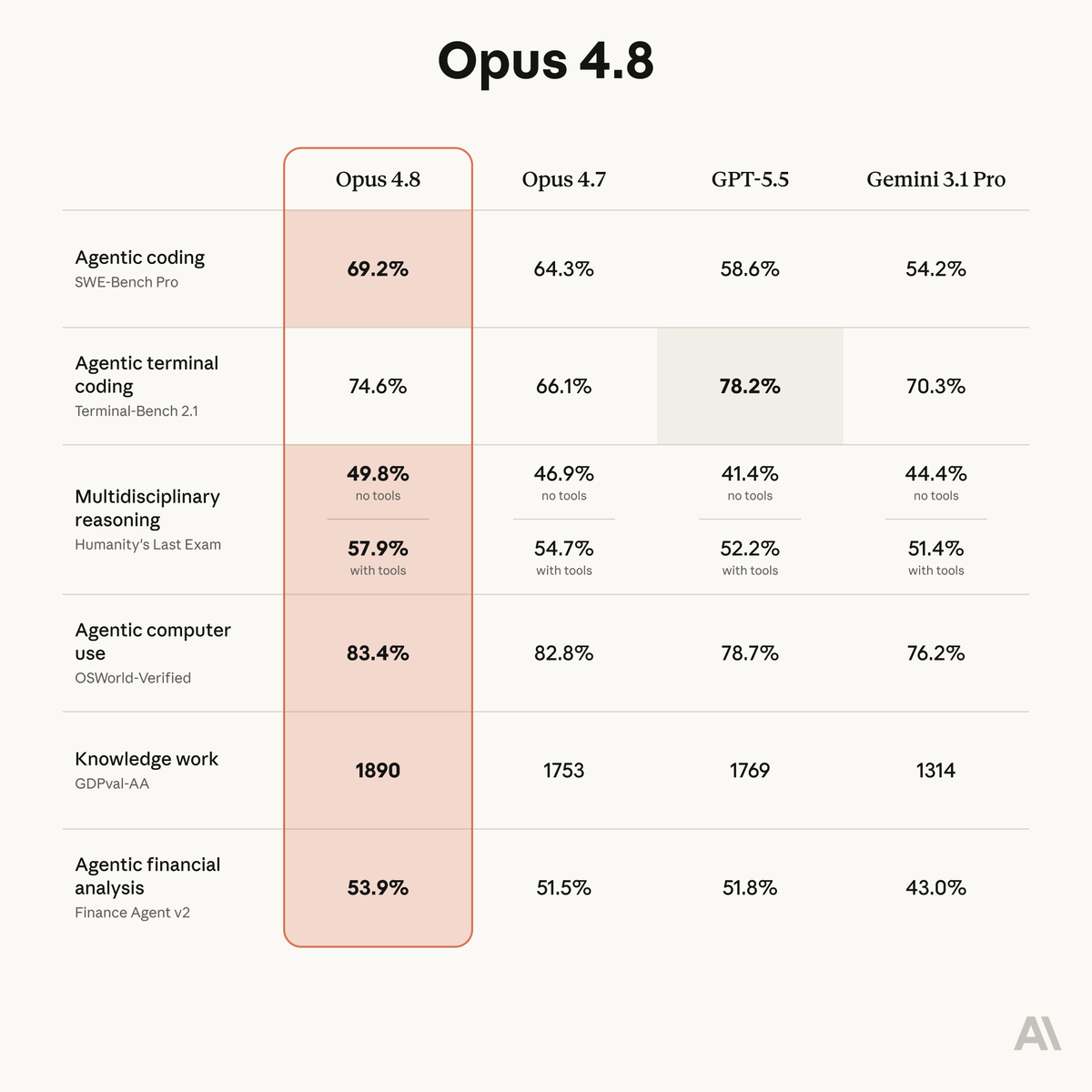
Anthropic released Claude Opus 4.8, an upgraded flagship model with improvements across coding, agentic tasks, reasoning, computer use, knowledge work, and financial analysis. The company says the model is more reliable, more likely to flag uncertainty, and less likely to overstate progress when evidence is limited. In coding evaluations, Opus 4.8 was also less likely to leave flaws in its own code unreported. Anthropic also introduced Dynamic Workflows in Claude Code, allowing Claude to break large tasks into parallel subagents, along with Effort Control for choosing how much reasoning effort the model applies to a task.
Anthropic’s Project Glasswing finds 10,000+ serious software vulnerabilities

Anthropic announced that Project Glasswing, its collaborative AI cybersecurity initiative launched last month, has discovered more than 10,000 high- or critical-severity vulnerabilities in critical software systems. The project involves approximately 50 partners using the Claude Mythos Preview model to scan critical software infrastructure worldwide. Anthropic noted that progress on software security is now limited by how quickly organizations can verify, disclose, and patch the large numbers of vulnerabilities found by AI rather than by discovery speed.
Huawei proposes Tau Scaling Law as a new path beyond Moore’s Law
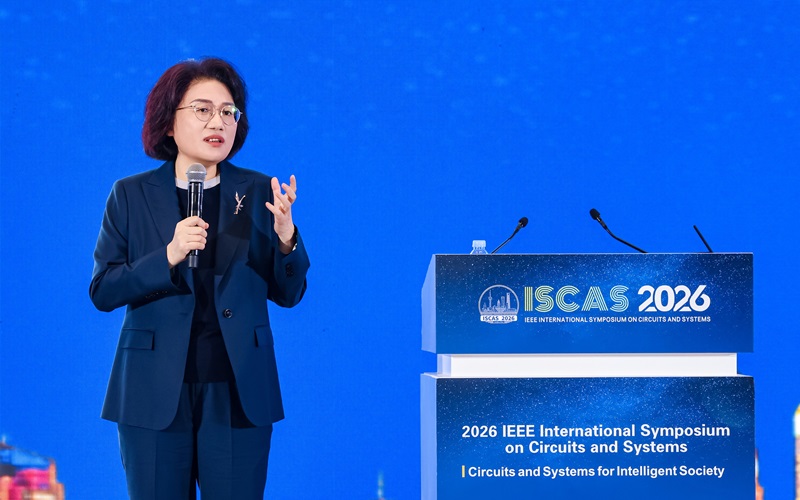
At the 2026 IEEE International Symposium on Circuits and Systems in Shanghai, Huawei’s He Tingbo presented the Tau Scaling Law as a new principle for guiding semiconductor industry development. The law proposes replacing geometric scaling with time scaling as the guiding principle for semiconductor and electronic system evolution. Based on this principle, Huawei developed technologies like LogicFolding to compress signal propagation delay and improve transistor density. Huawei projects that its high-end chips could reach transistor density equivalent to 1.4nm process by 2031.
Alibaba Qwen3.7-Max ranks second among providers on Code Arena
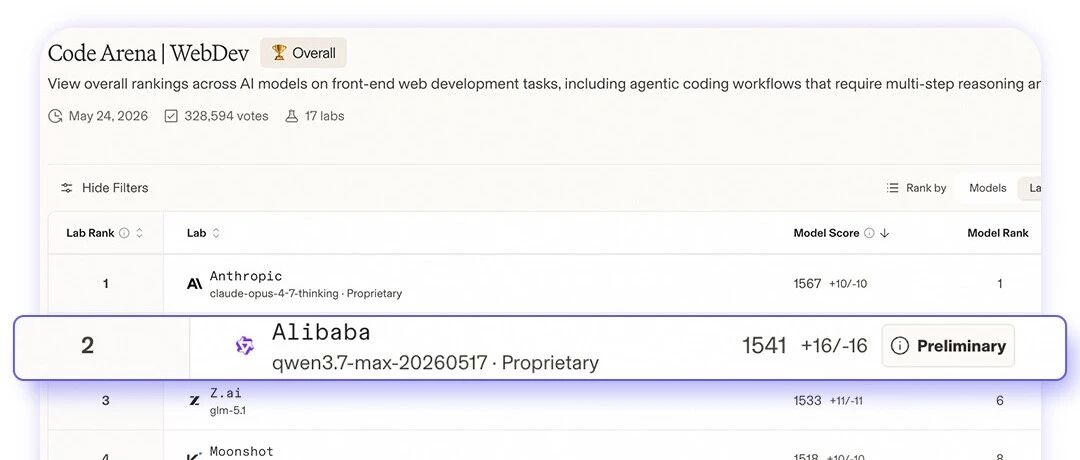
Alibaba’s Qwen3.7-Max model achieved a score of 1541 on LMArena’s Code Arena benchmark, ranking second globally among AI model providers in the reported results. Code Arena evaluates AI coding capabilities through blind testing where models generate complete, interactive web applications from scratch, with results voted on by users. Qwen3.7-Max is designed for agent scenarios and demonstrates significant improvements in programming, agent capabilities, and long-running tasks, supporting up to 35 hours of continuous operation and over 1000 tool calls.
OpenAI introduces secure MCP tunnels for private enterprise servers

OpenAI introduced Secure MCP Tunnel, allowing organizations to keep Model Context Protocol servers private within their network while enabling ChatGPT, Codex, and the Responses API to connect through outbound-only HTTPS connections. The tunnel creates an outbound-only connection from hosts inside the organization’s network to OpenAI-hosted MCP endpoints, eliminating the need to modify inbound firewalls or make MCP servers public. Teams can deploy tunnel clients as Kubernetes sidecars, dedicated deployments, or VM services to facilitate secure access to private MCP servers.
ElevenLabs launches Dubbing v2 for expressive translation in 90+ languages
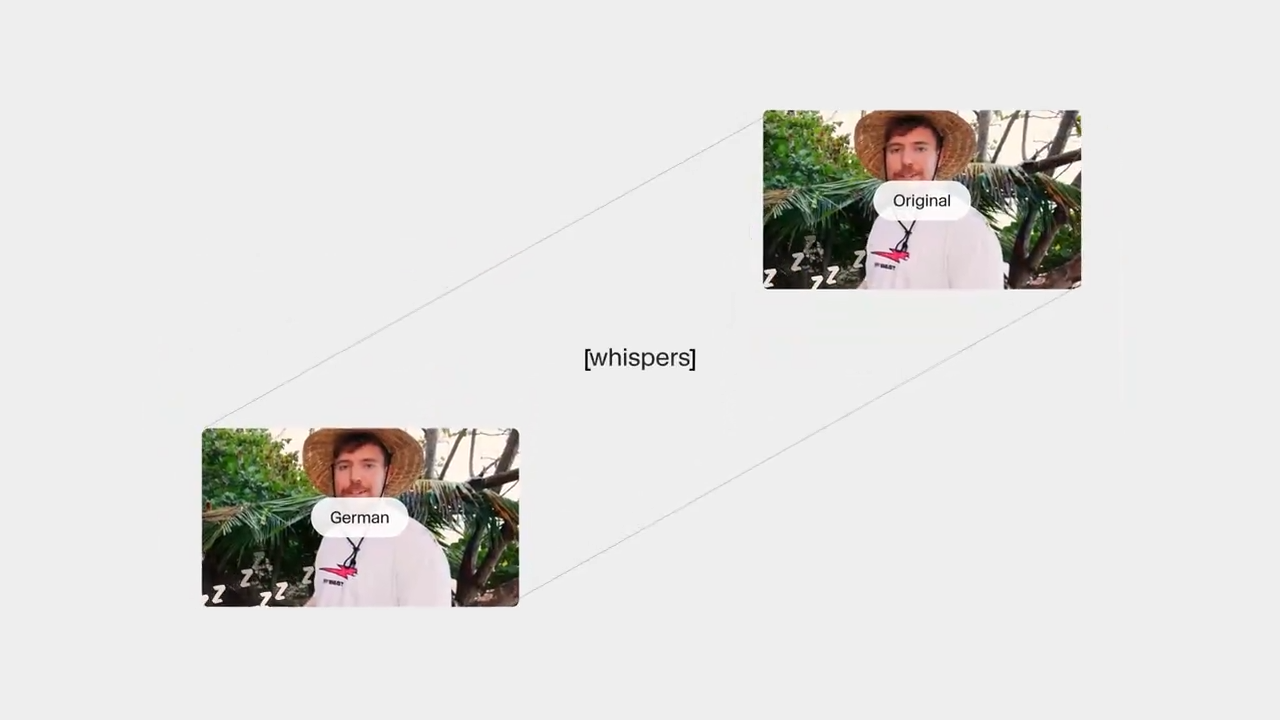
ElevenLabs introduced Dubbing v2, a new AI dubbing model that translates content while preserving the original speaker’s emotion, performance, tone, and delivery across target languages. The model creates automatic voice clones of original speakers and applies them across supported languages without manual setup. Dubbing v2 works from original audio rather than transcripts alone, enabling it to maintain authentic performance characteristics and localize content naturally for native speakers rather than producing literal translations.