China AI Native Industry Insights – 20260824 – DeepSeek | Huawei | Qoder | more
Today’s digest features significant advancements from DeepSeek, Huawei, and Qoder. The overarching theme connects the innovations of multimodal AI and mobile network development. DeepSeek has introduced its V4-Flash-Vision-Exp experimental multimodal model on an API platform, aiming to enhance integration capabilities, while Huawei’s SingleRAN 22.1 is paving the way as the first commercial software in the mobile AI era. Qoder’s new Voice feature for Qoder Mobile enables a real-time voice-based development workflow, marking an important step in voice integration in development environments. Discover more in Today’s China AI Native Industry Insights.
1. DeepSeek Launches V4-Flash-Vision-Exp Experimental Multimodal Model on API Platform
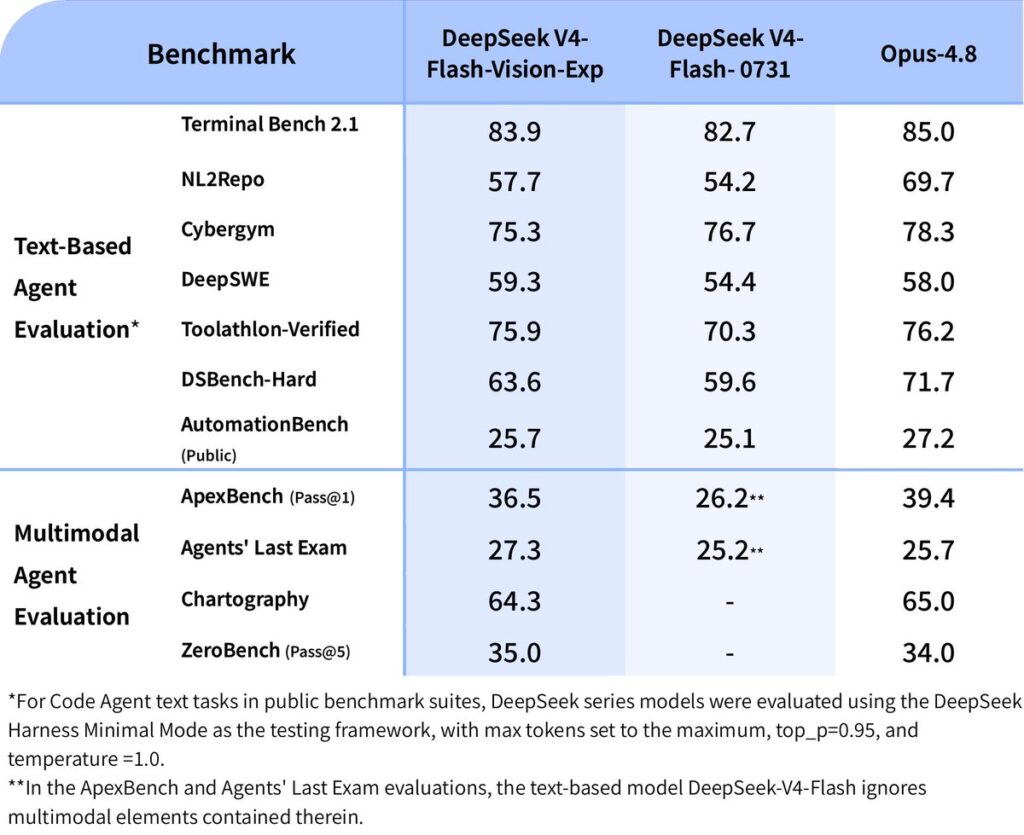
DeepSeek has released DeepSeek-V4-Flash-Vision-Exp, an experimental multimodal model, on the DeepSeek API Platform. The model retains the full text capabilities of DeepSeek-V4-Flash, including support for agents, reasoning, and world knowledge, while adding multimodal capabilities. On multimodal agent benchmarks, V4-Flash-Vision-Exp significantly outperforms V4-Flash and achieves performance close to Opus-4.8. Alongside the model release, DeepSeek also published DeepSeek Harness 0.1.1, which includes out-of-the-box support for the new model. Developers can access it via the model identifier deepseek-v4-flash-vision-exp.
Read more: https://api-docs.deepseek.com/guides/vision/
Video Credit: @deepseek_ai on X
2. Huawei Releases SingleRAN 22.1, First Commercial Software Version in Mobile AI Era
Huawei has officially released SingleRAN 22.1, which the company describes as the first commercial software version in the Mobile AI era. The release is designed to build a multi-dimensional capability network foundation for telecom operators. Huawei states the version is intended to drive large-scale implementation of Mobile AI technology across operator networks. The launch marks a milestone in Huawei’s efforts to bring AI capabilities into commercial mobile network software deployments.
Video Credit: NotebookLM
3. Qoder launches Voice feature for Qoder Mobile enabling real-time voice-based development workflow
Qoder has released a Voice feature for its Qoder Mobile application, allowing users to interact with the AI coding assistant through real-time voice conversations. The feature enables developers to discuss ideas, clarify requirements, and execute tasks such as code review and submission using natural language voice commands. Users can access the feature by creating a new session and tapping the real-time voice chat entry in the bottom right corner. The Voice feature maintains project context and task history, eliminating the need to repeatedly explain background information during multi-turn conversations.
Video Credit: NotebookLM
That’s all for today’s China AI Native Industry Insights. Join us at AI Native Foundation Membership Dashboard for the latest insights on AI Native, or follow our linkedin account at AI Native Foundation and our twitter account at AINativeF.