China AI Native Industry Insights – 20261126 – Alibaba | Tencent | Qoder | more
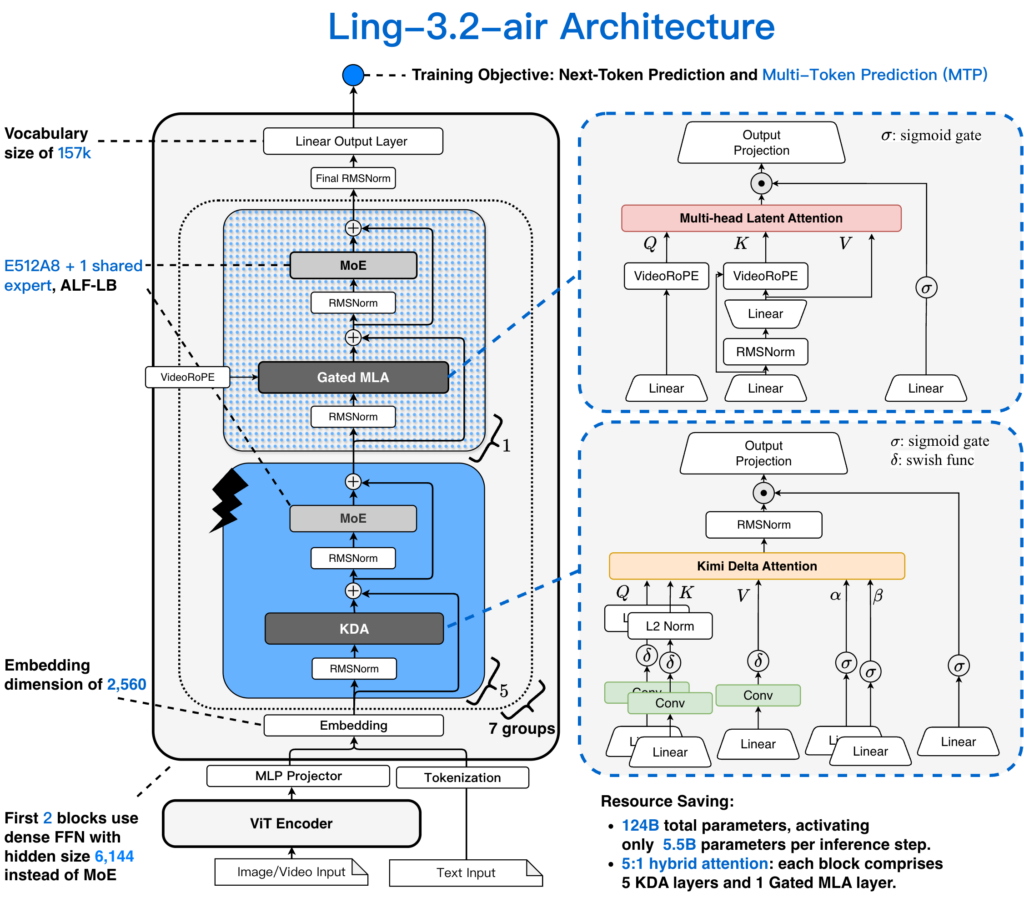
Ant Group and Tencent AngelSlim take the spotlight in today’s digest with significant advancements in AI model automation and deployment efficiency. The broader theme connects to model efficiency, showcased by Ant Group’s new Ling-3.2-air model bringing major automation gains and Tencent’s release of GGUF quantized weights for the Hy4 flash 224B model enabling local deployment. Qoder CLI adds to this focus with its new CodeMode feature, which reduces agent execution rounds by 28%, marking a substantial improvement in performance. Such enhancements suggest a potent trend toward more efficient AI model management and deployment capabilities. Discover more in Today’s China AI Native Industry Insights.
1. Ant Group Releases Open-Weight Ling-3.2-air Model with Major Automation Gains
Ant Group’s AntLingAGI introduced Ling-3.2-air, an open-weight model sharing the native multimodal architecture of Ling-3.0-flash-VL. The model has 124 billion total parameters with 5.5 billion active parameters. It shows stronger workflow automation and professional document reasoning capabilities. On the AutomationBench-AA benchmark, performance rose from 15.7% to 61%.
Read more: https://huggingface.co/inclusionAI/Ling-3.2-air
Video Credit: NotebookLM
2. Tencent AngelSlim releases GGUF quantized weights and inference code for Hy4 flash 224B model for local deployment
Tencent’s AngelSlim compression toolkit has open-sourced GGUF quantized weights and inference code for the Hy4 flash model, a 224B parameter model, enabling deployment on personal devices. The compressed versions reduce model size by up to 69 percent, with the smallest version at approximately 126 GiB compared to the original 410 GiB. Performance tests show generation speeds of up to 89 tokens per second on devices with 48 GB VRAM and 47 tokens per second on M5 Max Mac with 128 GB memory. The quantized Q3_K version maintains performance within 0.4 points of the original model across multiple benchmarks including software engineering and presentation generation tasks.
Read more: https://mp.weixin.qq.com/s?__biz=MzkwODU2OTQyNQ==&mid=2247499086&idx=1&sn=2621d76c5d058dc9b5b0236f602c4895&chksm=c1729293984aa5d6a6db3f7551d3c676c9fb9b5f546df425107185cad431e3556d8e6396ea90&scene=0&xtrack=1#rd
Video Credit: NotebookLM
3. Qoder CLI launches CodeMode feature reducing agent execution rounds by 28%
Qoder CLI has released CodeMode, a new agent working mode that allows AI to generate and execute small programs packaging multiple sequential steps instead of requesting model intervention for each individual tool call. Benchmark tests on DeepSWE 1.1 and TerminalBench Pro Private datasets using Qwen3.8-MAX model show that CodeMode reduces average main execution rounds by 26.97% to 28.46% and input tokens by 26.18% to 28.94%, while maintaining actual tool operation volume. The feature is particularly beneficial for multi-step chained tasks, scenarios with verbose tool outputs, and systems with numerous MCP tools, and can be enabled via environment variable and command line or SDK configuration.
Read more: https://mp.weixin.qq.com/s?__biz=MzE5ODI2NzI5Nw==&mid=2247494934&idx=1&sn=b3506667eec52a98b9b5f88744dea8cd&chksm=97be9e8d61a5f4bb68cbc62ec764c251b9f1c5ed8c11980bd6199f49cc2cbcaf7460f8945db1&scene=0&xtrack=1#rd
Video Credit: The original article
That’s all for today’s China AI Native Industry Insights. Join us at AI Native Foundation Membership Dashboard for the latest insights on AI Native, or follow our linkedin account at AI Native Foundation and our twitter account at AINativeF.